Before anyone takes umbrage at the linking of Catholics and bohemians, please allow me to do a bit of historical explication:
Early in the 20th century, at a time when all newspapermen were called bohemians, GK Chesterton was one of England’s most prominent journalists and writers. He was also a devout Catholic.
He created Father Brown—a mystery-solving Catholic priest—who is the title character of a current BBC series that is also seen on Amazon Prime. Hilaire Belloc, Chesterton’s closest friend, was likewise a sincere Catholic and writer, as was J.R.R. Tolkien, of Lord of the Rings fame.
Oscar Wilde, who flirted with Catholicism for much of his adult life, converted on his deathbed, reportedly saying: “Catholicism is the only religion worth dying in, though I could never have lived as one.” The great Irish poets Patrick Kavanaugh and Nobel laureate Seamus Heaney were Catholics, as well.
In 19th century France—a useful cutoff point—where and when “bohemian” first came into use as a catch-all term signifying toilers in various artistic disciplines, as opposed to natives of the Kingdom of Bohemia in eastern Europe, the novelist Honore de Balzac was a practicing Catholic. Poet Charles Baudelaire was also a lifelong Catholic, along with Marcel Proust, and painter Paul Cezanne.
Composers Franz Lizst, Mozart, and Vivaldi were all Catholics.
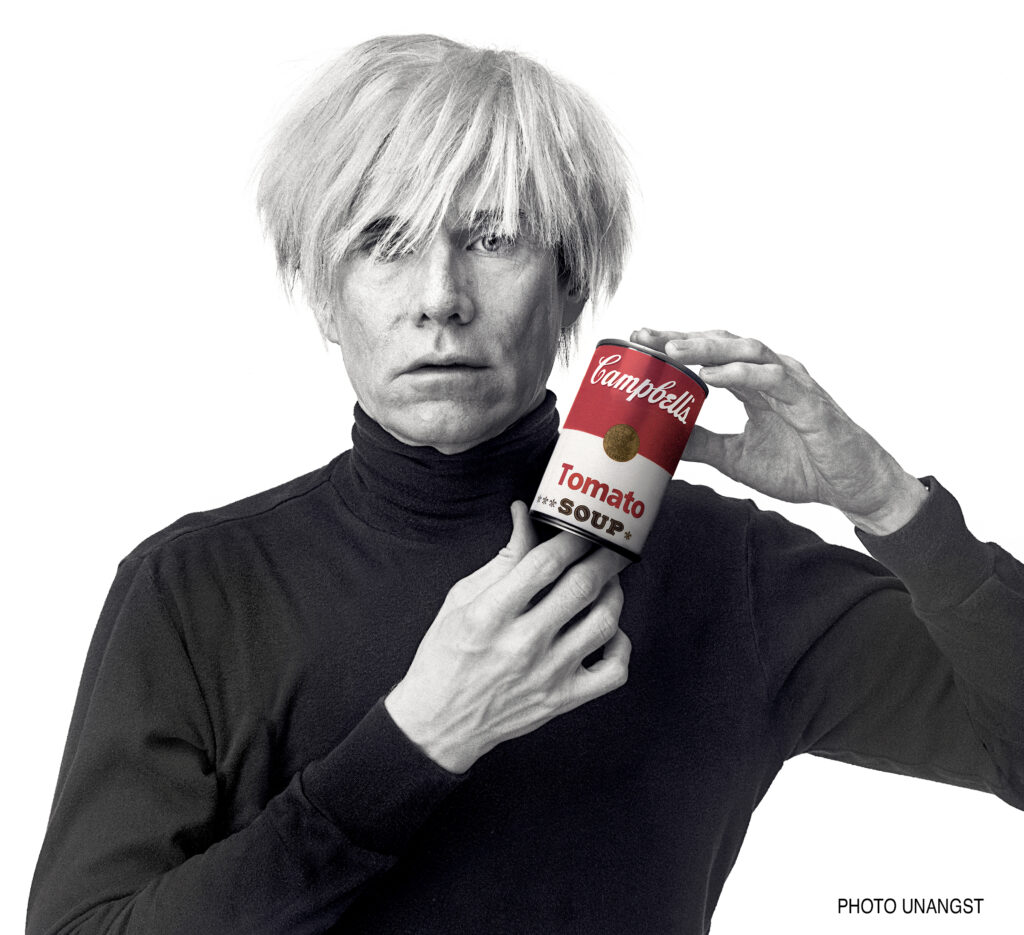
Moving right along, Andy Warhol was a Catholic known to attend Mass daily. Writer Flannery O’Connor wrote about the challenges of being a practicing Catholic and an author. Filmmaker Alfred Hitchcock spoke of the solace his Catholic Faith gave him. Martin Scorcese and Nicole Kidman are both Catholics.
Poet, literary critic, YouTuber, and former chair of the National Endowment of the Arts Dana Gioia is a prominent Catholic. Last month, Gioia posted a video of himself reading his translation of St. Francis of Assisi’s “Brother Sun” poem, in honor of the 800th anniversary of the death of the sainted founder of the Franciscans.
Is my point made that disputation of the idea of Catholic bohemians will not stand? If so, on to what’s happening throughout downtown Manhattan—a Catholic revival that includes thousands upon thousands of people, most of them young, flocking to Catholic churches. In my life, I cannot recall seeing churches so filled with congregants on a consistent basis, rather than the annual blossoming of attendance at Christmas and Easter.
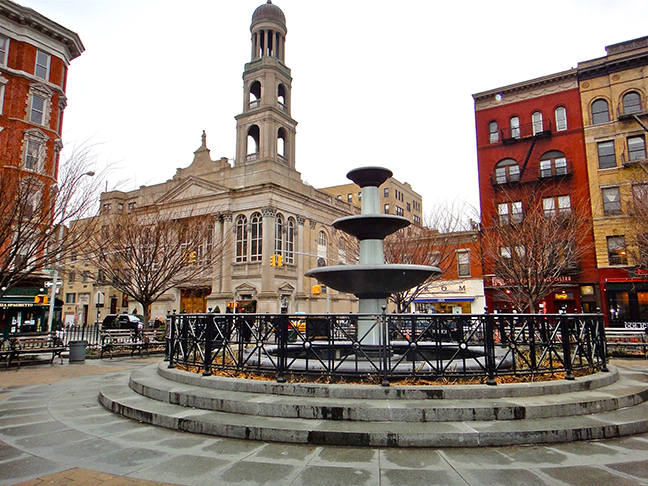
“Our ministries are much fuller,” said Boniface Endorf, a Dominican friar who is the pastor at St. Joseph’s on the corner of Sixth Avenue and Washington Place. “In vino veritas, for example, in 2018, 20-30 people would be a good turnout. Now, we’re regularly getting 150-200 people.” In vino veritas, a Latin expression meaning “in wine there is truth,” is a gathering of young professionals in their 20s that takes place after Sunday evening Mass. “It’s wine and cheese and a discussion of faith,” the friar explains. Before becoming a Dominican friar and pastor, Boniface Endorf was an attorney here in Manhattan. By his own account, he was also an atheist “for a long time.”
St. Joseph’s, where I am a parishioner, seats 650 people. It is regularly packed to capacity with worshippers. “We often have standing room only, with as many as 200 people standing,” said Father Boniface. That was the case when I attended evening Mass as a blizzard began on the last Sunday of February.
Neither rain, nor snow … Oops. That’s the post office.
St. Joseph’s is not alone in experiencing a revival of Catholicism marked by increased attendance. “We’re seeing it here, at Our Lady of Pompeii, Saint Anthony of Padua, at Old St. Pat’s, at Saint Peter’s downtown,” said Father Boniface. St Peter’s, on Barclay Street, is the oldest Catholic church in the state. It has served as a continuous place of worship for over 240 years.
St. Joseph’s, St. Anthony’s, and Our Lady of Pompeii are all within three or four blocks of where I live on MacDougal Street, and I have seen the influx of worshippers at all three churches. These days worship and prayer are primary sources of joy in my life, and I do a little parish-hopping now and again.
“Ultimately, the cause [of the current revival] is the Holy Spirit,” said Father Boniface. “But there are intermediate causes. One of them that I see is that in our culture—late modernity or whatever you want to call it—not much is being handed down culturally to people as they are raised. So, what someone in their 20s today is stuck with is a culture that pretty much tells you that the meaning of life is to be a consumer and a cog in an economic machine. You are what you can produce and what you can consume. And that’s not very satisfying to the human spirit. People are looking for something deeper.”
He went on to say, “Some of those people in that search find religion, especially in the Faith of the Catholic Church. I think it’s the same dynamic that leads some people to political radicalism. I think that one of the reasons people choose the [Catholic] Faith over the many opportunities of choosing in this culture is, we live in a time and place that some writers have called ‘liquid modernity.’ Everything is constantly changing.” The Catholic Church has existed for 2,000 years, since early Christianity.
Father Boniface believes, and few could disagree, that in human history—including the Industrial Revolution—no generations “have seen as much change as we have in the last 30 years. And everything can seem ephemeral, especially in an online world. People long to be connected with something deeper.” He said people often tell him that when they come to a Catholic Rite or Mass, they feel they are experiencing something that’s been that way for centuries. “It connects them to something deeper than the zeitgeist,” said the priest.
My good friend and colleague, the poet, translator and literary critic Atanasio DiFelice lives a block from Old St. Patrick’s Cathedral, which is located on Mulberry Street in Little Italy. It’s where he goes to Mass on Sundays. DeFelice is a Third Order Franciscan—the order established by St. Francis of Assisi for lay people.
He witnessed the revival firsthand there. “The church was a dead zone for many years. Old St. Pat’s is too important for the archdiocese to shut down, as has happened with other parishes in New York.” At its lowest point, attendance was often DeFelice “and six old Italian ladies,” he said.
“Now it’s packed at every service.” He told me about an event on a recent Sunday. Like St. Joseph’s, Old St. Pat’s—as it’s known colloquially—has gatherings with wine and cheese after the last Mass on Sundays, in the basement below the church.
“One week I decided to see what that was all about,” said DeFelice. “Downstairs, it was packed to the point where it was difficult to move. It was mainly but not all young people. I couldn’t help but notice that Chazz Palminteri was at one side of the room and Alec Baldwin was on the other side of the room. But it was too crowded for them to get together if they had wanted to. I couldn’t even get a second glass of wine. It was that crowded.”
Joe McConnon also mentions Old St. Pat’s as a place where the current Catholic revival is undeniable. McConnon is an attorney and retired NYPD cop. “Old St. Pat’s, St. Vincent Ferrer [on the Upper East Side, where Warhol was a parishioner], Holy Innocence—parishes that have a strong emphasis on traditional liturgy and traditional values,” said McConnon, “are where the revival is really happening.”
“One thing that’s known for sure statistically is that the precipitous decline in the number of people identifying as Catholics that began in the 1970s has stopped,” said McConnon. “But it’s not universal growth of the Church.” McConnon observes that many of, but not all, the new Catholic congregants are young men in their 20s. “I’ve noticed that they’re choosing liturgies and ministries that require work. They want something a little stronger, a little more forceful.”
The decline in church attendance in the 1970s coincided with a new, widespread availability of birth control pills and a proliferation of Planned Parenthood clinics. It is worth noting that Margaret Sanger, the founder of Planned Parenthood who began her career as a nurse on the Lower East Side, was an avowed eugenicist. Eugenics is the racist belief that Black people and other “lesser” groups should not be allowed to reproduce. Sanger went so far as to promulgate the idea of sterilization as part of her racist and ableist system of beliefs.
Throughout my life, until recently, the idea of “overpopulation”—the Malthusian nightmare, if you will—has been espoused by “experts” and “scientists” and demographic-spouting economists. Birth control pills were hailed as an antidote.
Now birth rates are declining precipitously around the world, if we are to believe the current crop pf prognosticators. We are told that there are not enough people being born to sustain social security. Tech titans tout robots as the solution. In this light, the Catholic Church’s prohibition against birth control begins to look farsighted.
I broached this topic with Father Boniface one Monday evening after a session of Dominican Discourse. “It’s just one example of how disaster happens when humans try to exert their will above God’s will. The destruction of the environment is the same thing. It’s about power.”
The level of intellectual discussion as part of spiritual discipline is something that attracts me to St. Joseph’s. The weekly Dominican Discourse sessions comprise just one ministry geared to appeal to the minds of believers. The homilies after the reading of the Gospel are inspired and inspiring. Dominicans are known as the Order of Preachers, and these preachers regularly receive their congregation’s rapt attention.
“These East Coast Dominicans are rock stars,” Professor George Corbett said in January. Corbett was in the Village to deliver a series of lectures on Dante’s Divine Comedy in McGuire Hall underneath St. Joseph’s. He is widely considered one of Catholicism’s foremost experts on Dante. His home base is the University of St. Andrew’s in Scotland, where he is a Professor of Theology.
I was delighted to attend two of Corbett’s lectures, one of which fell on my birthday. It was a great way to begin another trip around the sun. Corbett gave the lectures at the behest of Father Boniface, who, like me, is an avid lover of Dante’s masterwork.
Pastor Boniface is aided in his ministry and preaching at St. Joseph’s by Friars Jonah Teller and Jacek Buda, a native of Poland who recently joined the parish clergy after ministering at the Vatican in Rome for a year and a half. Brother Paul Kennedy is the sacristan.
The proximity of NYU is, by my reckoning, part of the reason for the intellectual approach to spirituality that infuses St. Joseph’s. Four blocks away, the NYU Catholic Center at 238 Thompson St. is also experiencing a revival marked by increased attendance. Friars Cassian Derbes and Vincent Bernhard, both Dominican priests, provide spiritual guidance for a growing number of students.
“There has been tremendous revival at The Catholic Center at NYU,” Father Cassian told me. “Students are looking for meaning in life, and they are looking for community. Our numbers have more than doubled this year. We have gone from four bible study groups to nine.” Likewise, daily Mass attendance has tripled.
Friar Cassian said, “What we’ve seen is that for university students, the question, ‘what am I going to do with my life?’ is often the same as the question, ‘who am I?’ The question of personal identity is paramount. Students are looking for wisdom, and they come to discover that wisdom in Jesus Christ and in the Catholic Church. When students muster the courage to look more deeply, they find Jesus Christ.”
The priest, who has a charismatic personality and a booming laugh, continued, “Students are realizing that faith and reason are not opposed. Students are finding in the Catholic Church a complement to their education—a deeper search for the truth, the good of right reason, and a love for wisdom.”
The strong Catholic presence at NYU includes the Newman Club, founded in the 1890s. Named for the British cardinal, St. John Henry Newman, it is the oldest student club at the university. (Yes, the red-crested birds were named after the red-robed Church prelates, in case you wondered.) The NYU Catholic Center also serves students from several other colleges and universities throughout the city. It receives no funding from NYU and is entirely donor supported. They recently launched a fund drive to raise $16 million to renovate the center.
Maria Sablich is one of the current officers of the Newman Club. She’s now a senior majoring in drama at NYU Tisch—more specifically musical theater in the New Studio on Broadway—and minoring in Business of Entertainment, Media and Technology. She is a devout, lifelong Catholic. Of her goals, post-graduation, she said “As a Catholic artist, I dream of fusing my faith with my career by bringing a Christian story/musical to Broadway and the screen, while always keeping my identity in Christ.“
Another Newman Club officer, Conor Dillon, is a convert to Catholicism. “I was brought into the church at the St. Joseph’s Easter Vigil Mass two years ago,” he told me.
Dillon is also a senior, studying Business and Technology Management with a concentration in Finance at NYU Tandon School of Engineering. “The Church is where I find responsibility to tradition and moral truth. Worship is what brings me closer to what I am supposed to be.”
His post-NYU goals? “There are three things I want out of life: to be an example of what a working Catholic man should be, even in an environment that doesn’t make that easy, to be a strong foundation for my future wife and children in both faith and life, and, ultimately, to make it to heaven.”
The number of people, including NYU students, converting to Catholicism is also on the rise at St. Joseph’s. It has tripled over the last year.
Theresa Rivezzo has been a parishioner at St. Joseph’s for 30 years. The Dominican friars, led by Father Boniface, took over at St. Joseph’s in 2018 and she attributes much of the recent revival to that. “They’re preaching the Gospel in a way that gives hope. This hope creates community,” she emphasized. “The young people feel connected. These kids are on fire,” Like Joe McConnon, Rivezzo believes the current revival is largely driven by young men finding the Faith because of oppressive cultural trends.
Rubelcy Herrera is a young architect who came from Rhode Island to work in Manhattan. He said, “The Catholic Church teaches us that we are not villains, that masculinity can be very beautiful. On top of that, there’s no fakeness. People genuinely care about you, and you don’t see that a lot in New York.”
Herrera is a regular at St. Joseph’s in the evening and on weekends. Weekdays he often worships at St. Vincent Ferrer. He added, “I believe that what’s making me Catholic, the beauty behind Catholicism, is the truth. There’s a lot of tension going on in the political realm and there’s also a lot of tension within the ideas of being a man.”
There is no denying that young men were in the majority, and maybe still are. Of late, though, using my skills as a professional observer of society, I’ve noticed that more young women are coming to Mass. When I was a young man, it was often said that if you wanted a good wife, go to church. It may be that the word is out and these days young women of a traditional mindset are considering the obverse of that idea.
But Catholicism is not a dating app. It is a way of life, and salvation, for believers. “We are not cosmic accidents that come from nothing and are out of nowhere, the world of Waiting for Godot,” said Father Boniface. “We were created out of God’s love and are called to return to God’s love. This life is a life of learning to love. Our lives have meaning and purpose and there truly is good and evil and therefore our actions have consequences; versus the blatant nihilism we see everywhere in the culture.”
It seems de rigueur that any discussion of Catholics and our churches include references to the architecture. That could be the topic of another entire column. Maybe I’ll write it someday. Meanwhile, there are some incredibly beautiful Catholic churches in downtown Manhattan, and they’re open to the public at no charge. Pop in and take a look sometime. Maybe you’ll find something more than aesthetic pleasure. Maybe you’ll find a heavenly peace that is beyond understanding.