
On Friday afternoons, the community room at Westbeth artist building performs a small act of defiance. The room itself is not terribly remarkable: a low ceiling, a row of stackable chairs, the linoleum has the matte tiredness of civic space. Nothing about the room announces transcendence, except maybe the grand piano.
By a quarter past four, something begins to gather.
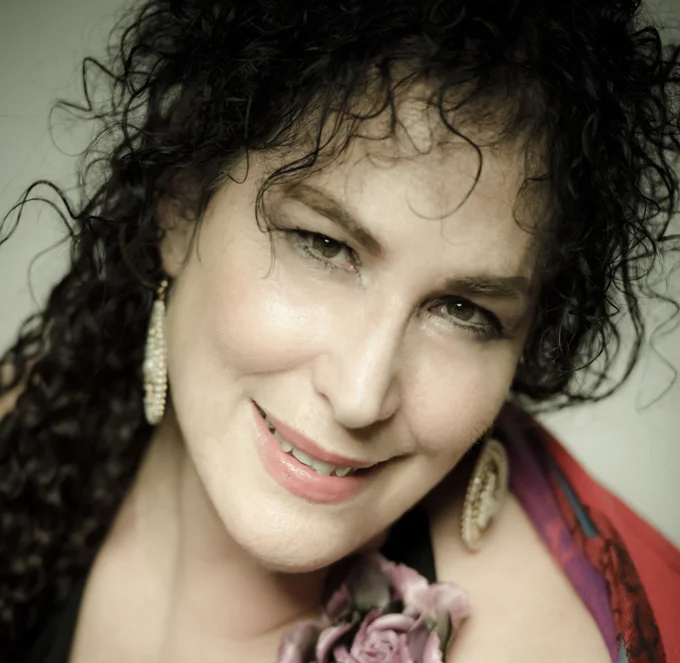
Eve Zanni arrives first. She is, among other things, a formidable singer and an unlicensed alchemist. The headband is in place, as much accessory as insignia, and her smile carries the clear suggestion that whatever burdens have accompanied you may wait outside.
Isaac Raz follows and takes his position at the piano. He tests a chord, then another. The notes move into the room cautiously before settling in with intent.
Eve is a resident of Westbeth. For years now, she has given away what the market would happily price: time, training, discernment, the exacting kindness of someone who knows what a voice can do and refuses to let it hide.
By half past four, a group of thirty regulars and newcomers alike has begun to flock the room. Some are residents of Westbeth, moving with the proprietary ease of those who live upstairs. Many others come from farther afield: one gentleman from the Bronx, a couple of ladies from Chelsea, many more from the immediate West Village.
The chairs are rearranged in a loose semicircle. There is the low murmur of prelude, news exchanged, ailments catalogued. Eve stands before the group, by the microphone, hands on hips, then raised, then clapped once with the command of someone who knows precisely how much authority to claim.
“All right,” she says. “We begin.”
The warm-up unfolds with joyful silliness. There is breath. Syllables projected like salvo. Pa, Pa, Pa, Pa, Pa. Thirty voices attempt a single arc. It continues: consonants bounced like rubber balls, vowels stretched and chiseled, shoulders rolled, knees softened.
Often, the first song is Blue Skies. The lyrics are projected on the wall. Isaac’s piano gives our exploratory voices the architecture it needs. “Blue skies smiling at me; Nothing but blue skies do I see”. On the last note, Eve grabs the air with her fists as to swallow all our collective voices in a synchronized halt.
To an outsider, the spectacle might appear unremarkable. Thirty adults, an occasional toddler, and a little dog, making exaggerated vowel shapes (canine included!), shaking out their limbs, producing sounds that hover between conservatory and playground. And yet the stakes are societal, not performative.
In a city that calculates value – and sets policy – by the square foot, that assigns worth to air rights, this particular use of space defies easy quantification. No one here is auditioning. No tickets are being sold. The tip jar on the piano remains where it is, its crumpled bills and loose coins bearing silent witness to the fact that this enterprise, if it can be called that, operates outside the logic of profit.
The room does not charge admission. The reduction in loneliness, the fortification of confidence, the reorientation of spines and spirits is free of charge to the participants. It does not submit a report on increased civic cohesion. And it does not hire a lobbyist to make sure it continues to exist. It simply endures.
The essential point is that something of value is happening without being sold.
And this is where the risk lays: these intangible, immaterial assets are hard to protect when faced with the powerful real estate and commercial forces at play in New York City. The next corporate push veiled as public policy may make the case that the space would be better used as a housing unit, or maybe as a monetary instrument to raise funds better spent elsewhere. The language of optimization has a way of showing up, armed with spreadsheets, and at times, really bad intentions.
Eve’s impact could never be justly assessed or compensated. The true surplus has already been distributed, invisibly, among the thirty who flocked and sang under Eve’s kind tutelage.
Eve has the radiance of someone whose talent is oozing, the kindness of those who have seen and lived good and heartache, and the grace to remind us how fortunate we are to be exposed to her skills, let alone being taught some of it.
Outside, the city continues its accounting. Inside, for a brief hour, a different ledger has been kept, one that records not transactions, but participation. Not profit, but presence.
Even in this devout age of performance, where “highest and best use” is invoked with religious fervor, we shall always understand that Eve and her contributions are in black ink in the ledger. The city owes her, not the other way around.