This is the third New York Film Festival I’ve attended as a critic, and increasingly I’ve found myself foregoing the marquee titles — this year represented by the likes of Luca Guadagnino’s After the Hunt and Bradley Cooper’s Is This Thing On? (and, for some reason, Springsteen: Deliver Me from Nowhere) — for the more offbeat, under-the-radar films in the Currents lineup. Officially, this “international showcase of adventurous new voices and inventive artists who are reshaping the language of cinema” is a “complement to the Main Slate.” Unofficially, it’s the programming that retains some of the festival’s spiky origins: 16 features and five programs of shorts from around the world that play with form, structure, and narrative.
Tsai Ming-liang’s Back Home is a 65-minute chronicle of actor Anong Houngheuangsy in his home village in Laos — and maybe of human history — told through a series of disconnected shots, like a movable slideshow. (And isn’t that all cinema is anyway?) With Escape, Masao Adachi combines his history as a Japanese political revolutionary and revolutionary director with archival material, dramatizations, and “outright fantasy” to tell the story of Japanese terrorist Satoshi Kirishima. Georgian filmmaker Alexandre Koberidze shot Dry Leaf on a Sony Ericsson phone, adding a layer of Lynchian uncanniness to a father’s search for his missing adult daughter across rural landscapes. Radu Jude’s dystopic-Romania-set Dracula is low-fi, and bananas.
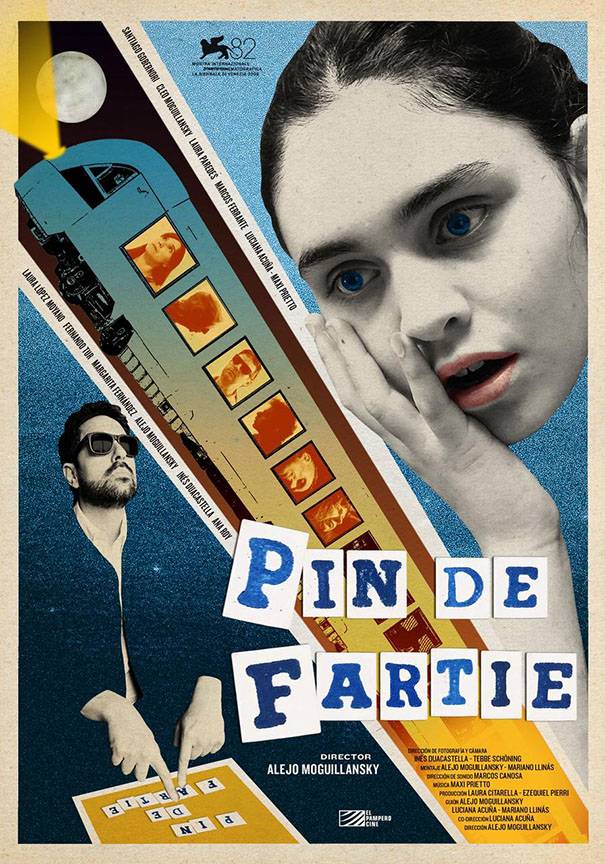
But especially noteworthy is the exceptional, relevant, and moving Argentine feature Pin de Fartie, made by the El Pampero Cine collective and directed by Alejo Moguillansky. Using the Samuel Beckett one-act Endgame as a starting point and throughline, Moguillansky and his collaborators crack open the concept of adaptation by presenting three interpretations of the play that confront questions of art, memory, time, exile, love, mortality, empire, responsibility, and the act of storytelling.
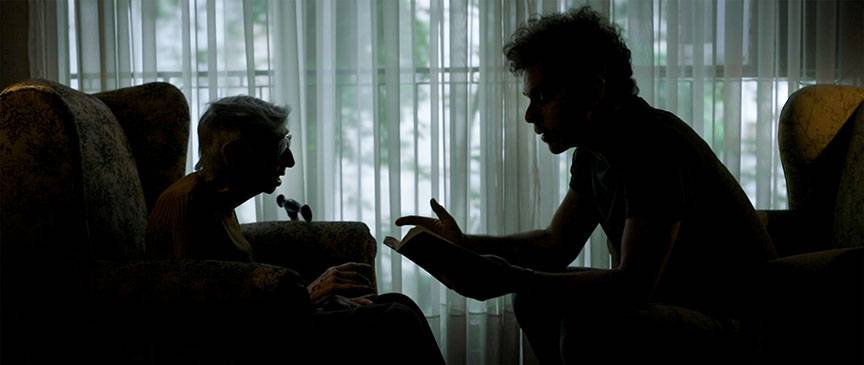
The first piece is a film within the film, a straightforward cinematic interpretation of a blind master (Santiago Gobernori) and his exasperated but loyal servant (Cleo Moguillansky) at each other’s throats on a desolate island. The characters of Nagg and Nell, the servant’s parents who live languidly, as if in an opioid stupor, in a dumpster, serve as a kind of connective tissue between this and the second vignette, where a man (Marcos Ferrante) and woman (Laura Paredes) meet clandestinely every week, at the same apartment (in matching khaki raincoats, no less) for an affaire d’theatro: they rehearse the play. And they do it not in preparation for a performance but to connect with the text, and each other. The concluding panel of the triptych is the story of a blind elderly woman (Margarita Fernández), a former pianist stuck playing Beethoven’s “Moonlight Sonata” because it’s the one she can conjure from long ago memorization, and the son (the director) who visits and begins reading Endgame with her, unlocking a long dormant piece of her memory. The superstructure around all of this is El Pampero Cine itself, two members singing and narrating the stories we’re watching and two more creating no-budget special effects for the more traditional interpretation.
Each piece of this construction resonates with a kind of melancholic urgency. We see our relationship with parents reflected in the tragicomic dynamic between the master and his servant. We recognize the connection and tantalizingly-out-of-reach desires crackling between the rehearsing actors. We confront the temporal and corporeal ravages awaiting us in the pianist. (There is a shot of her aged, skeletal, veiny hands at the keyboard, shot in near darkness with a backlit curtain gauzily illuminating the scene that is hauntingly beautiful.) And when the narrator describes the blind man and his servant as exiles of a nation that no longer exists, gazing at Europe, and the past, from their bucolic isolation, we confront the no-longer-irrational possibility of exile, the absurd longing for a place that has disappeared (and maybe never was).
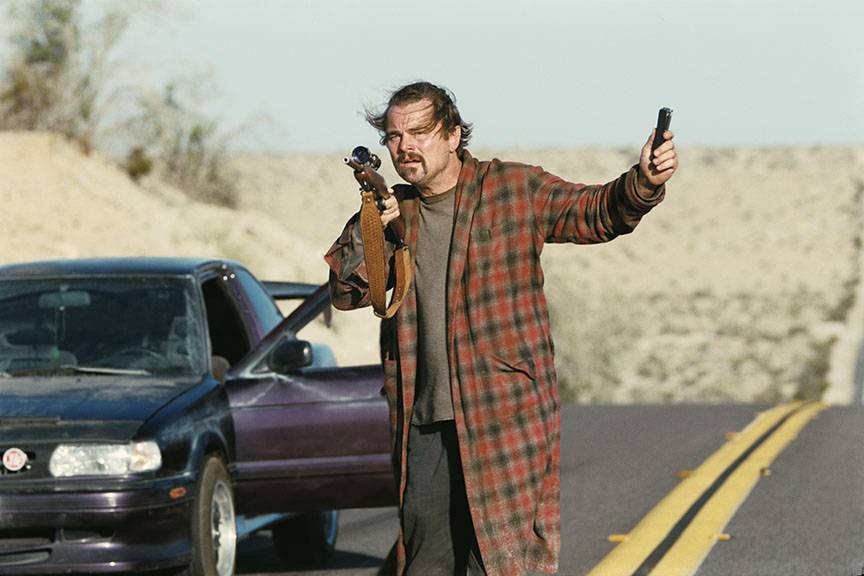
One vignette folds into another before opening to the third, themes and ideas and narration crisscrossing between them to weave a unified tapestry. It’s delicate, intricate filmmaking that works almost completely. The ending is the soft spot, an inert and sudden conclusion that feels unworthy of the smart and methodical film that precedes it. Indeed, like Beckett’s original, Pin de Fartie contains multitudes. In a director’s statement published for the film’s inclusion in the Venice Film Festival, Moguillansky asked 11 questions about Pin de Fartie. Among them: “A farewell film? Yes.” “A film about the crisis in a southern country? Yes.” “A film about infinite tenderness and peaceful horror? Yes.” “An adaptation of a play for the cinema? Absolutely not!” “A film about a homeland once called Cinema? Resoundingly yes!”
I’m not sure if Moguillansky is implying that cinema, like the blind master’s country, is kaput. His film would seem to prove otherwise. But if cinema is indeed finished — or, at least, renamed — Pin de Fartie is a fine island to watch the sun set.
* * * *
Speaking of bygone nations, if we’re still allowed to watch whatever movies we want, say, in two years, 2025 has given us a perfect double feature of America’s meltdown.
The first, Ari Aster’s Eddington, was released in July to some critical acclaim and a lot of crickets in the theaters. Seems like Americans aren’t ready— or simply refuse — to confront our recent pandemic past and the deformation it caused to our minds, norms, and communities. Aster’s neo-Western, set in the early days of masking and social distancing, itself goes a little nuts in its last third, but its long-term redemption will rest on it holding a dirty and cracked mirror up to our COVID-warped psyches and politics and showing us who we became, and who we might have always been.
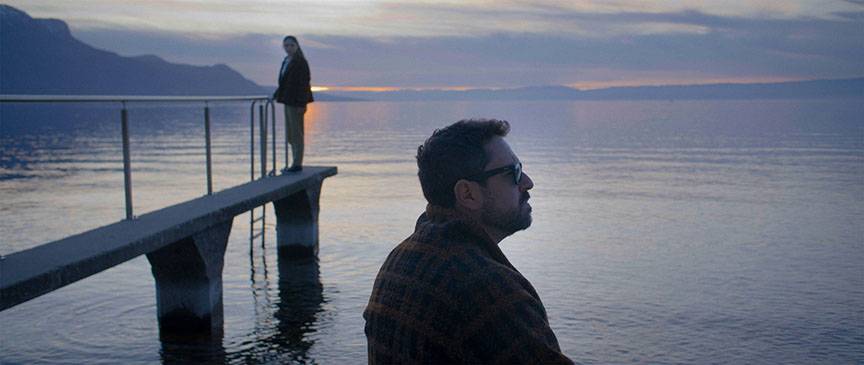
Walking out of Eddington, it was hard to imagine a better movie grappling with our national mood. But then Paul Thomas Anderson came along at the end of September with One Battle After Another, a 161-minute take-no-prisoners sledgehammer. A genre mashup of action movie, Western, stoner comedy, and political thriller, Anderson marries the tools and tactics of 1970s paranoia filmmaking with the sardonic detachment of ‘90s indies to tell what is, at base, a domestic drama — an aging revolutionary (Leonardo DiCaprio) laying low from a vengeful government must save his teenage daughter (Chase Infiniti) from a mercenary military leader (Sean Penn) bent on joining a secret cabal of ultra-nationalist racists — on the largest canvas possible, figuratively and literally.
Figuratively because this adventure involves confronting a fascistic government that assassinates political enemies, rounds up undesirable immigrants, and incites riots as pretexts for savage police actions; breathless car chases; and white-knuckle action sequences that would make Michael Mann blush. Literal because Anderson shot One Battle on VistaVision, the second feature in decades (after last year’s The Brutalist) to use the old widescreen technique and the first to screen in the format in more than 60 years (the last was One-Eyed Jacks, in 1961). The effect of VistaVision on the film is impossible to overstate. It’s big. It’s bold. It’s got film grain and deeply saturated colors and feels like film should feel. And there’s one sequence, near the end, along a long and lonely road moving and rising and throbbing as characters chase and elude that is simply magnificent thanks to qualities of the format.
Is the paroxysm democracy’s death rattle? Or simply a violent seizure brought on by a fever that desperately needs to break? For the first time, at least for my generation, the question feels unanswerable. But if things break the right way — either now or, you know, sometime later — Eddington and One Battle After Another will stand as the cinematic testaments to America’s crack up. Enjoy the show.
(One Battle After Another is screening in VistaVision in only four theaters in the world — and one is the Regal Union Square. Treat yourself and see it in that format; we might have to wait another six decades for the opportunity.)