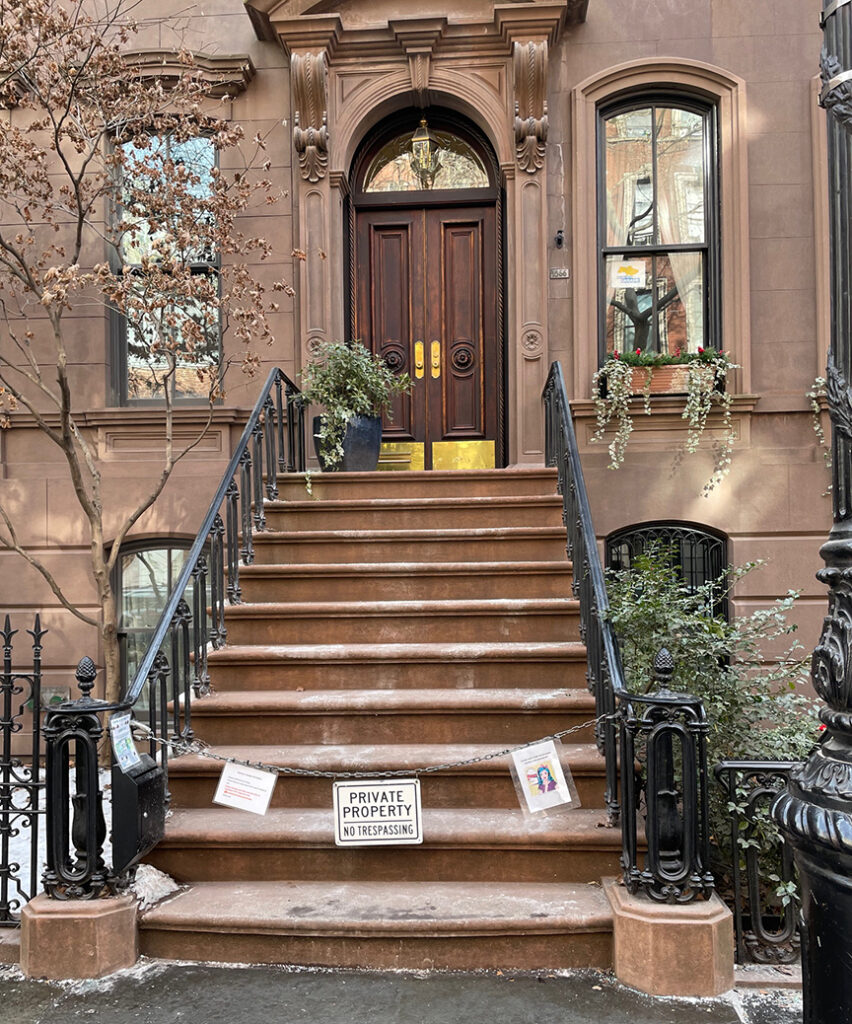
The pathways of Greenwich Village—full of lovely old human-scale buildings—can transport a dreamy pedestrian back in time. The Village is not your typical tower-filled Manhattan streetscape, and you can thank the landmarks law for that.
The 1965 Landmarks Law allowed for the protection of individual buildings, plus swathes of neighborhoods—“historic districts”—deemed special because of their historic, architectural, or cultural value. When you see a brown street sign, it’s the signal you are in a historic district—where protected buildings can’t be altered or demolished without the approval of the New York City Landmarks Commission (LPC).
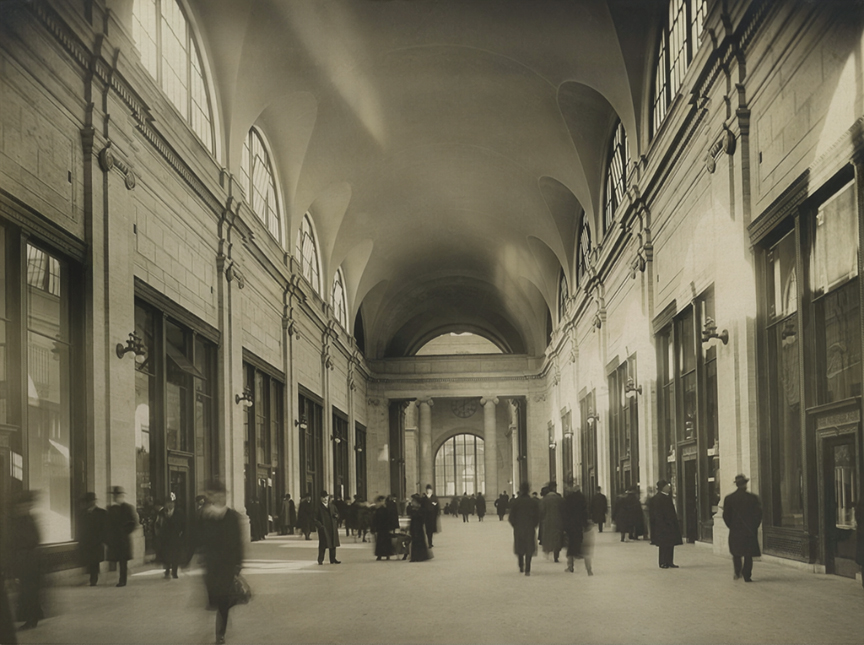
New York City passed the landmarks law in a fever pitch of grief, mourning the demolition of the unprotected Beaux Arts masterpiece, the old Penn Station. The threat to Penn Station galvanized the city’s nascent historic preservation movement.
In the sixty-plus years since, every New York City mayoral administration has carefully added to the city’s historic legacy, with threatened buildings and neighborhoods securing protections.
Until Eric Adams. According to a new, updated report by Village Preservation—the historic preservation group advocating for Greenwich Village, the East Village, and NoHo—Mayor Adams was an extraordinary “outlier,” protecting far fewer buildings on an annual basis than any of his predecessors. (Even Abe Beame, who was struggling with keeping a bankrupt Big Apple afloat.)
The few buildings that did gain protections from the Adams LPC were not under threat—some were city-owned, some were already protected, and some were bigger than could be built under current zoning laws.
During the Adams administration, the LPC promised a salutary shift of focus. With its “equity framework,” it would turn its attention to the outer boroughs and Upper Manhattan, promoting diversity and telling stories of communities overlooked in the past.
Yet perhaps the most startling finding of the Village Preservation report is that the Adams LPC failed even to execute the LPC’s much-touted equity framework. The number of buildings annually preserved in the outer boroughs? 153, fewer than any other administration, excepting the fiscally-challenged Beame’s. And in Upper Manhattan, the historic Black neighborhood especially threatened by development? Just 0.5, a fraction of a building, was saved each year.
Fighting a false narrative
Given this sorry and surprising record, on Jan. 27 Village Preservation convened an array of preservation groups for an urgent online panel discussion, asking “Is a Golden Age of NYC Landmarking Over?”
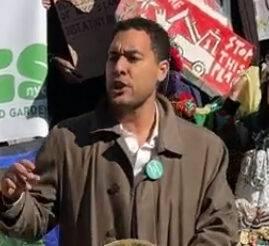
Introducing the event was New York City Council Member Chris Marte, the newly appointed chair of the city council subcommittee on landmarks, who represents southernmost Lower Manhattan.
Marte vowed “to be aggressive…to make sure that the golden age of preservation has not ended,” offering his office as “an organizing platform” for local groups “looking to preserve their history, their culture in their neighborhood.”
Marte gave an impassioned defense of landmarking, declaring that worse than Adams’ record is the false narrative the ex-mayor and others promoted, poisoning the press and the public, “a narrative that landmarking was the enemy of affordable housing, that landmarking was the enemy of development and growth, that landmarking was going backwards and not moving forward.” He promised to “fight back on that narrative,” proclaiming landmarking as a tool that can help save old housing stock and sites precious to everyday New Yorkers, such as the Elizabeth Street Garden.
Expressing “a lot of hope and optimism,” he asserted “I’m ready to work, and I’m ready to work with you…to make sure the last four years don’t continue the pattern for the next four.”
Village Preservation Executive Director Andrew Berman then presented the report findings, focusing on the most recent four years. By the group’s calculations, the Adams administration landmarked about 157 buildings a year, or fewer than the 201 or 296 buildings annually landmarked by the LPC under Mayors Beame or Giuliani, respectively.
By contrast, Berman noted, the LPC under Mayors Lindsay, Dinkins, Bloomberg, and de Blasio landmarked, respectively, an average of 1,015, 889, 740, and 673 buildings annually.
Panelists expressed frustration with years of foot-dragging opacity from the LPC. Mitchell Grubler of the Bowery Alliance of Neighbors (BAN) observed that BAN is trying to protect some of the oldest and most historic edifices along the Bowery, at least one of which dates back to the 18th century. When the group submitted a “request for evaluation” (RFE) to the LPC four years ago, the Commission told them their request required “further study”—and BAN has heard nothing since.
Laura Sewell, Executive Director of the East Village Community Coalition, recalled a “very encouraging meeting” with the LPC in 2019, when EVCC, Village Preservation, and the Lower East Side Preservation Initiative (LESPI) brought the Commission a request for further landmarking in the East Village. Seven years later, she lamented, they’ve heard “nothing, absolutely nothing…. It’s really, really discouraging to try to do a beautiful job with an RFE and then have it collecting dust somewhere.”
Richard Moses, President of LESPI, described how the policies and practices of the LPC have shifted over the years to discourage preservation, citing the LPC’s apparent new deference to property owners. While the wishes of property owners have always been considered, Moses suggested that property owners now appear to have veto power.
To that observation, Berman added a further wrinkle, noting that he is aware of RFEs that appear to meet all the requirements for landmarking, and where the property owners actively want their buildings landmarked—and yet the LPC still won’t budge to designate these properties.
Promoting preservation: what to do?
Berman asked panelists what preservationists might do to jumpstart preservation during the Mamdani administration.
Berman himself observed that the Mamdani goal of more affordable housing is incompatible with “unfettered development”—because unfettered development means the demolition of older housing stock, where there are often rent-regulated apartments. (Berman took pains to point out that preservation does not directly preserve rent regulation, but is instead a tool that helps preserve the building.)
Frampton Tolbert, Executive Director of the Historic Districts Council (HDC), the citywide preservation group, suggested that preservationists should push the LPC to execute the Commission’s own equity plan, for example with benchmarks regarding the numbers of properties that should be landmarked in the outer boroughs and Upper Manhattan.
Sean Khoursandi, Executive Director of Landmark West!, the Upper West Side historic preservation group, seconded Tolbert’s point about trying to leverage the LPC’s own equity framework. He reeled off a multitude of unprotected uptown sites reflecting the city’s culture and diversity, among them the former LaGuardia High School (of “Fame” fame), Lincoln Center, and the Amsterdam Houses public housing complex.
HDC’s Tolbert echoed Chris Marte’s comments about creating a better narrative to underscore that landmarking can be a force for good, and not necessarily an obstacle to development. He pointed to a recent HDC report documenting and crediting new construction in historic districts—and observed that the LPC never acknowledged the report, although it was something the Commission could have used to blow its own horn.
Sewell remarked that the “YIMBYS” (the yes-in-my-backyard, pro-development opponents of preservation) “have done a phenomenal job of giving preservation a PR problem” and she looked forward to Chris Marte trying to change the narrative.
She also noted that there are social media-savvy young people already on the job: “I love the work that Youth Against Displacement is doing to make the message fun and direct. We need more of that. Also, I love these young tour guides with huge Instagram followings. How did they get a huge Instagram following if nobody’s interested [in preservation]? The interest is there.”
She suggested that preservationists have a wealth of arguments on their side that they have yet to leverage effectively, such as the major negative environmental impact of demolition and new construction. Sewell urged the audience to find new ways to communicate and do outreach, declaring that “saying the same things to the same group of people is not going to get us anywhere and we need to just really work to change it up.”