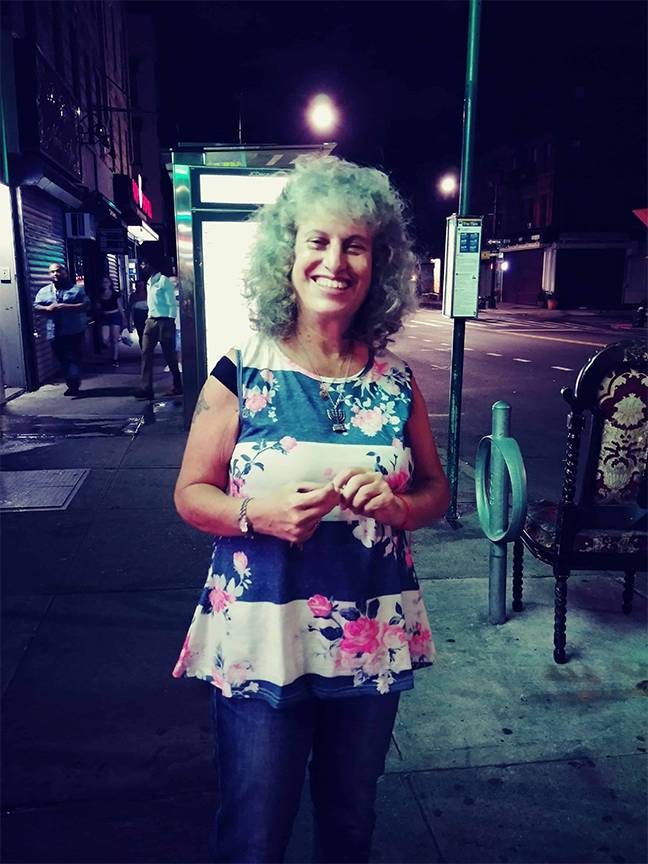
I walked around the Village asking people what is the main thing they think is wrong with New York City now. Easy question!
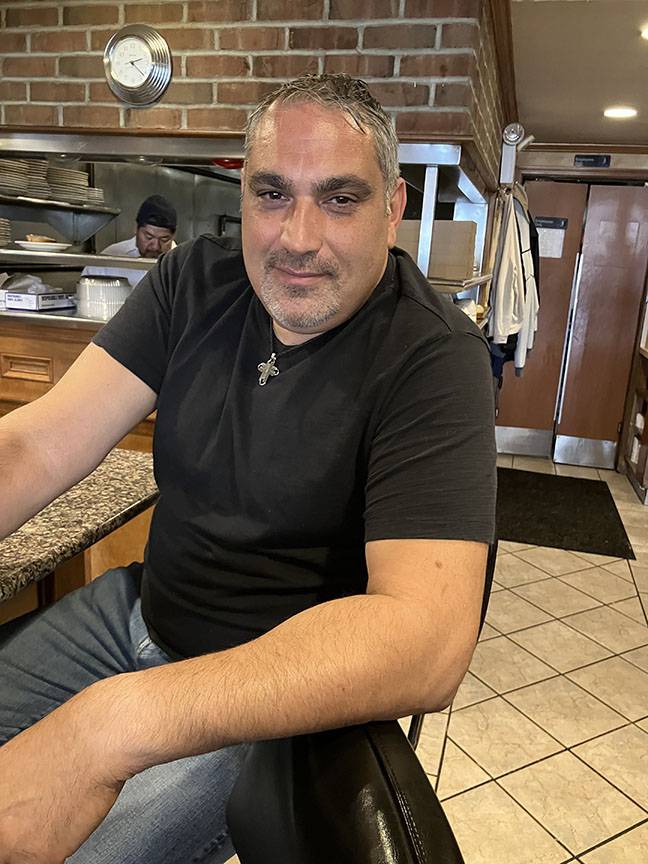
Elias Tsikis, owner, Washington Square Diner: Petty theft, a lot of homeless people and mentally ill people on the street, hanging around and committing crimes, it’s gotten out of control. And it’s interfering with the public as well businesses in general.
A lot of people agree with you, obviously. So this issue, the homeless people, the crime, all of the dysfunction out on the street, how does it affect you personally?
Well, early in the morning, there are these people outside that, you know, are mentally ill and causing commotion, and people are scared to come down the block. A lot of these people are hanging out by the door asking for money. They’ll even come in here, begging for money, and I’ll occasionally give them a cup of coffee, soup or a Danish or a sandwich or something, so they can calm down and leave. There are five or six who know me, and they don’t harass me anymore because I’ve taken care of them, but there are so many more coming in every day. I don’t want to speak bad of them.
You’re not. Ever since they shut down all the psychiatric facilities, the mentally ill people are out in the streets if they’re not in prison. The community programs they talked about obviously never happened.
So they’re getting no treatment.
No. If they do end up somewhere they’re just drugging them. Well thank you so much for talking to me. I’ll have to come in here for a meal sometime.
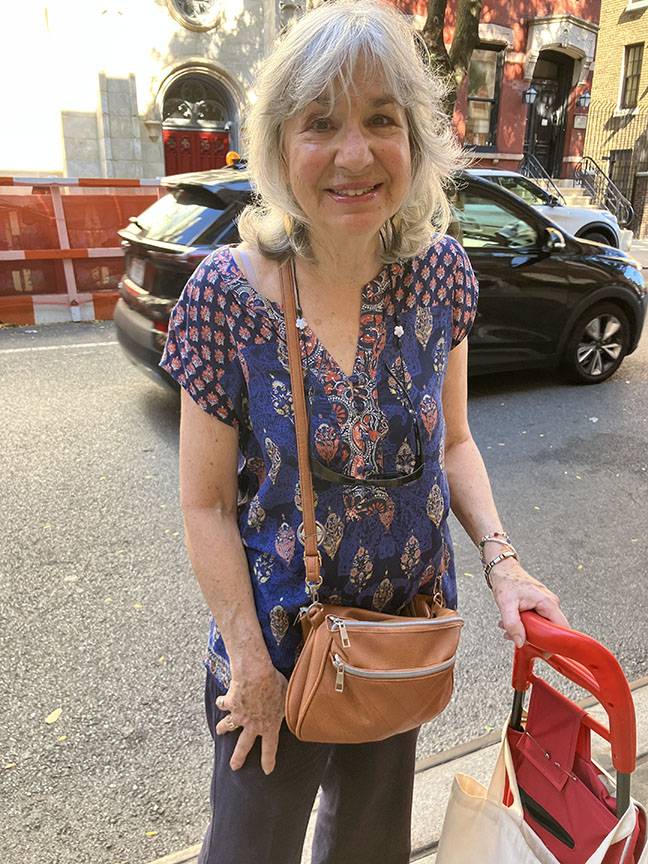
Sybil Pincus: I’m noticing more and more people sleeping on the streets. More people sleeping in the subway. People are asking me for money. I guess it’s summer and everybody’s out, but there just seems to be a lot more people in distress. When I take the number one (uptown) there’s a long passageway from Broadway to the subway, and oh, my God!
is it a homeless encampment?
It’s just full of trash, and it’s obvious that people have been in there. I feel like calling 311 and saying, this has got to go. What makes me really sad is that there are a lot of syringes lying around. I’ve lived in New York my whole life, I remember the west side in the ‘70s, in the late ‘60s, I remember Needle Park. But I’m noticing more people in distress on the streets now.
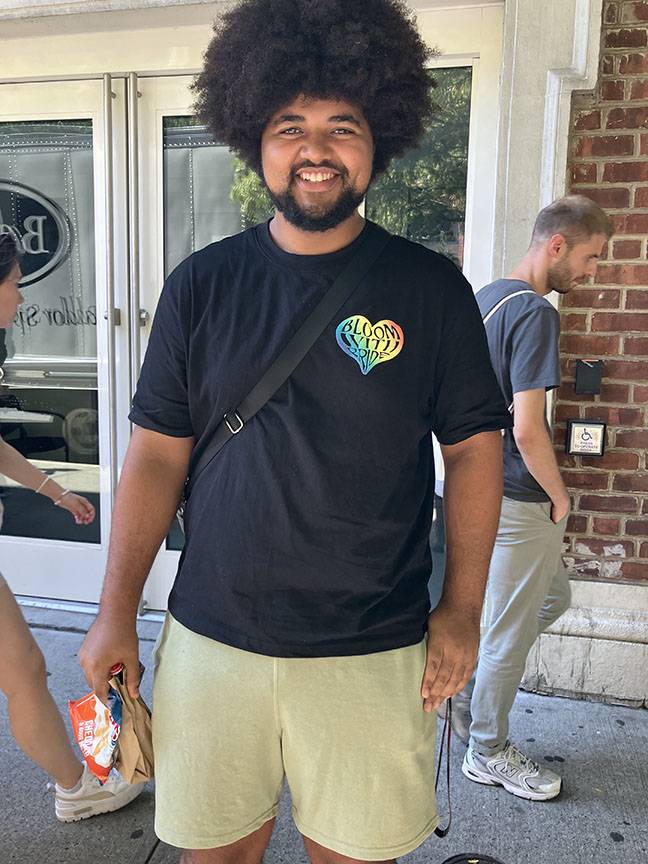
Nash McBride: I’m a musician, and I’m here playing my music, and one of the things that’s become very clear in the music world, especially in the jazz world, is that a lot of places where I play are becoming less accessible, to a lot of people.
You mean the places where you have gigs?
Yeah, places where you meet people, you play, you socialize…A lot of places get too popular, they get too expensive, they start closing their doors earlier…
It doesn’t seem like just any old person can come into these places and enjoy the music?Yeah. I feel like the more a place gets taken over by this — I don’t even know what to call it – this elite wave, where it’s a guaranteed cost of forty of fifty bucks a night — it takes away the accessibility of someone who just is out here trying to have a good time, or experience New York.
What kind of musician are you?
I’m a pianist. I play jazz piano, but also other forms of, you know, black music — R&B, and hip hop, and funk, and soul.
Did you study somewhere?
I did. I studied at Oberlin Conservatory.
In Ohio! My home state. That’s an excellent school.
It is. I met some incredible, incredible musicians there and some also incredibly ignorant people.
I’m sure!
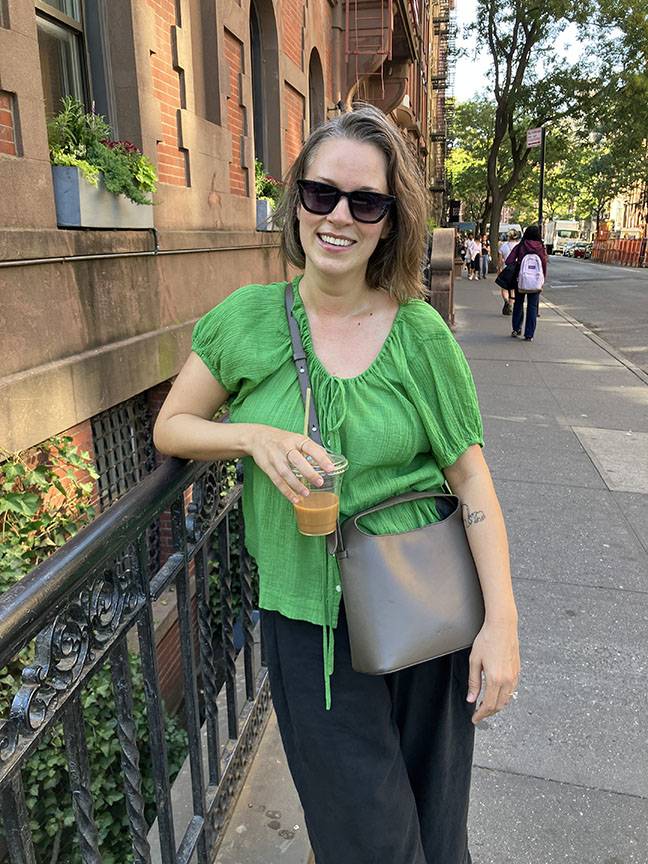
Caitlin Kehoe: I really love New York City. I grew up in rural Connecticut, and so this is light years away from where I grew up. I think the most glaring issue that affects 99% of a New Yorkers is the affordability issue. It starts with basics, like housing, and just runs the gamut. I mean, groceries, transit, everything. It’s just a really hard city to live in. There are people who are coming from higher levels of privilege that are able to make it work, and then there are people who struggle every single day. I think most of us land somewhere in the middle, right? Like, maybe we’re not wondering where our next meal comes from, but we’re counting the dollars in every paycheck.
Yes. And budgeting and making sure that we can get through the week. So why did you come to New York?
I got engaged to somebody who was living here, and I moved to the West Village a few months later. But we moved to Brooklyn, because the Village was so expensive. Now we live in Carroll Gardens.
Well, Carroll Gardens is kind of like a mini-Greenwich Village. Just kidding.
No, it’s true! But we’re looking for apartments in Manhattan again because it’s just, the life in Brooklyn isn’t the way that it is here.
Yeah, Brooklyn is like a separate country. But you’re right, that affordability might be the main issue affecting New York right now.
And I don’t know what the answers are. I’m glad that Zohran (Mamdani) is running (for mayor), and that’s part of his platform, and I think that’s a huge reason why so many people are behind him.
He wants to freeze the rents in rent-controlled apartments.
Yeah, my sister moved here three months after me, and she is in a rent stabilized unit and she’s like, I’m never leaving. She’s on the Upper West Side.
Yeah, if you live in a rent stabilized apartment now, you can’t move, even if you want to. You’re stuck. So you’re planning to move back to the Village even though it’s more expensive.
Yes! Greenwich Village is so incredible is because you walk through it, you feel the energy, and the artists that are here. I’m an artist, I’m so fortunate that I have a life partner who is able to bear the financial load so that I can pursue my art. But if New York continues trending up cost-wise, people are going to leave. We’re gonna run out of artists and everything that makes New York so eclectic and special and vibrant and full of culture. But it’s hard enough to make any kind of living as an artist. How are you supposed to pay thousands and thousands of dollars in rent? You have to have family support. Or you’re working full-time in finance or marketing or whatever, and the corporate world is incredibly demanding, and people are getting absolutely fried, burnt out, and then they don’t have the time and the energy to do anything that they actually care about.
What kind of work do you do?
I’m an actor.
Oh! That’s a tough field.
It is! I go to HB Studio, on Bank Street. But I also work in marketing, you know, to make money.
Well, all power to you. Lots of luck.
Thank you. I’ll need it.
No, you’ll be very successful. You have a vibrant personality. And your looks aren’t going to hurt.
(She laughs) Thanks you!
Eileen Black: I paid $9 dollars for congestion pricing a couple of months ago. I drove from New Jersey into Brooklyn, and the map routed me through Manhattan, and I realized that it was the shortest way, because nobody wanted to pay $9 congestion price. So I made record time,
But you weren’t happy with how much it cost you.
Yeah, I wasn’t happy. I think New York City needs lower costs for toll roads. I calculated that I spent about sixty dollars in two days, just driving to and from New Jersey. It was crazy. One day I drove over the Verrazano and the Outer Bridge Crossing and I spent, like, forty dollars for that day. And the other day, I got stuck with the congestion pricing, the New Jersey turnpike was like thirteen and a half dollars, the Garden State Parkway was three dollars – it ended up being a total of around sixty dollars.
Just to drive around locally.
Yeah. It gets to be unreasonable. Then I got my Easy Pass statement and it said, you got a discount for the Outer Bridge Crossing, and I was like, oh, yay! Really big discount I got. I mean, six dollars and ninety-four sense or something. It was just like a weird number.
Well maybe you won some kind of prize or something.
Yeah, right. Some kind of lottery.
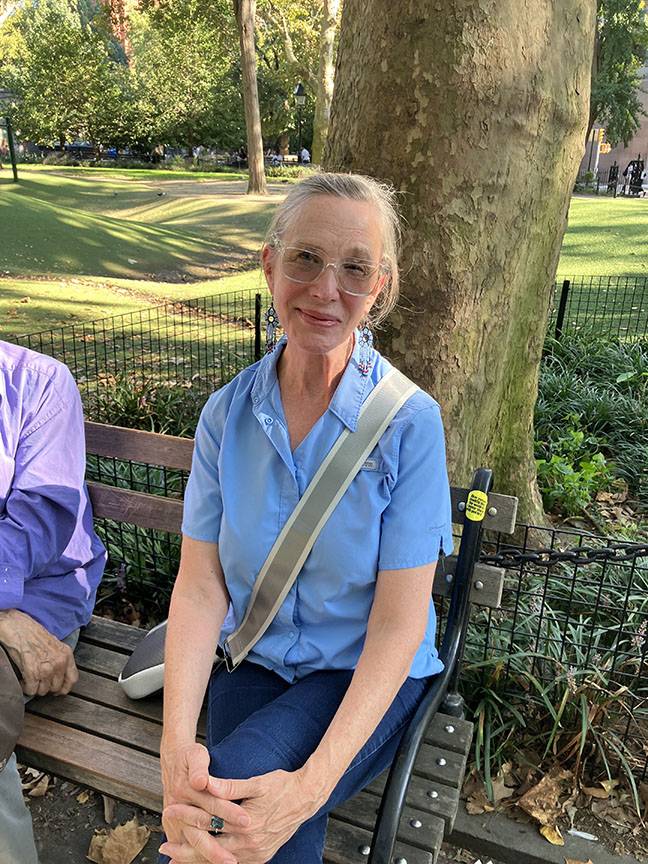
Jennifer Morrissy: We need prison reform very badly. I’m a volunteer with the prison system. We have education programs and also family centers within the prison so that the inmates can visit with their young ones. So now the National Guard is in our prison because they had some people striking. There was unrest. This is in Sing-Sing. In Ossining.
Where they had the electric chair. So the National Guard has been in Sing-Sing?
Yes. The inmates used to be able to go out in the yard three times a day. It was part of a schedule. It was like, food, yard, work, food, yard, work. They were able to rely upon that schedule. And now, since a couple guards went on strike and then there were problems inside the prison, some of the guys are in their cells 23 hours a day. Two and a half weeks ago, somebody immolated himself in his cell. A 23-year-old man. Because, you lock up these young men all day long…The inmates will tell you, this is not a prison, it’s an insane asylum. There are so many suicides. It’s just a horrific situation for these men…
And this is true with prisons everywhere, including New York City.
We’re entering a late stage of capitalism, where it’s the haves and the have-nots. And the have-nots have no housing and mental healthcare. And people who are mentally unstable get put in prison, and they face those conditions. We haven’t factored empathy into our tax structures in any way. And we certainly need some. But it seems like there’s nothing we can do to stop what’s happening. It’s very frightening.