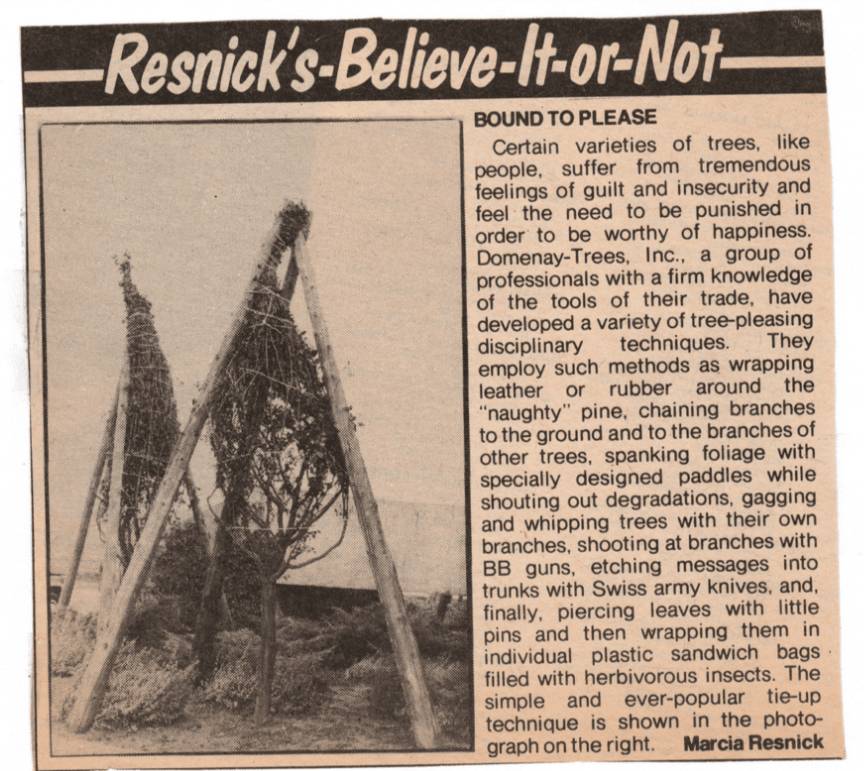
Haute punk art star Marcia Resnick leaves us a legacy, both in photographs by her … and of her. Smart, sophisticated and sexy, she rode the crest of Downtown Manhattan’s ascendance a half century ago. She was a regular at the hotspots, appearing in her trademark Hell’s Angel/ seductive schoolgirl attire and taking studio portraits of the late night stars.
Brooklyn born, Marcia led a fabled life as she became part of the wild demimonde. After attending NYU and Cooper Union, she studied conceptual art with John Baldessari and Allan Kaprow. She knew what she was doing. After grad school Marcia moved into a bare bones loft with multi-disciplinary artist Laurie Anderson and dancer Pooh Kaye.
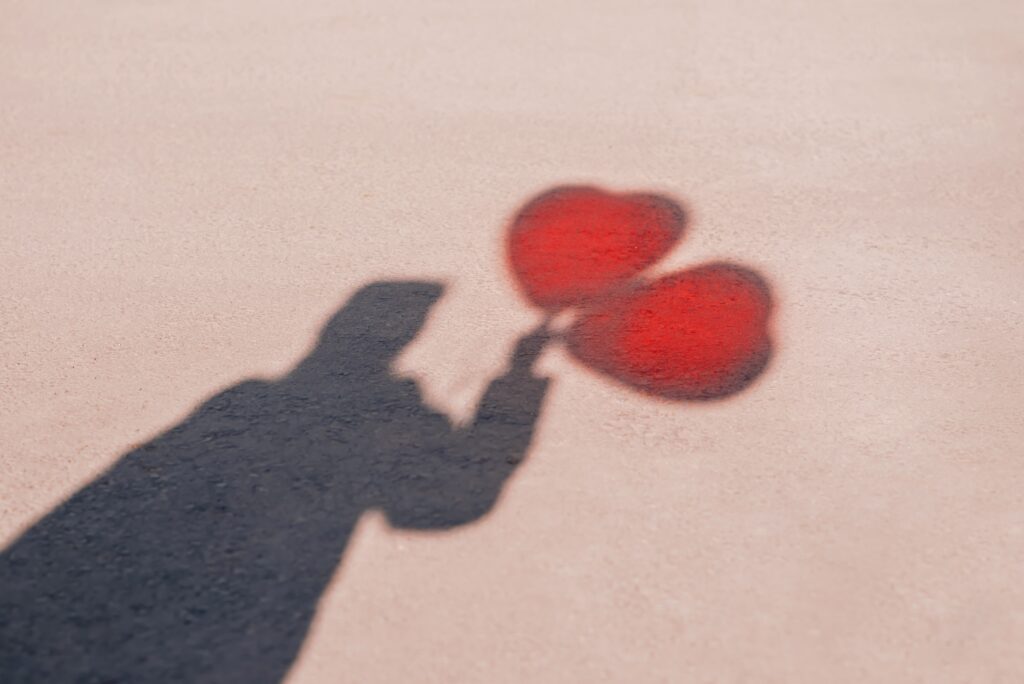
Marcia’s early masterpiece, Re-Visions, is a suite of text and narrative photos. Dealing with an adolescent’s passage into adulthood, the collection is considered to be a prescient foray into conceptualism. The work was conceived after a car wreck and marks an introspective time for the artist. Humorous and poignant, subjects included a young woman kissing Howdy Doody, slinky toys protruding from the model’s curly hair, and a balloon about to be punctured. Each black and white image accompanies a text.
“Re-Visions will always be a classic,” her art dealer Deborah Bell said. “Marcia wrote the texts before making the pictures. And made the photos in the studio to go with them. She emphasized that it was a text. Not a caption. She was incredibly intelligent and witty — great with words.”
She tweaked iconic Americana tropes in a way that was provocative but oddly reassuring, the black and white images evoking both irreverence and nostalgia. Marcia spoke in a MoMA recording about combining text and image. “When considered together they provide a layer of meaning. In my work, the words imply the truth implicit in the image and lend irony to that truth.”
I was lucky to see Marcia’s recent retrospective exhibit in Minneapolis. ReVisions was presented in its entirety in the traveling show which also included many of Marcia’s Bad Boy photo portraits. The Bad Boy portraits mark a further immersion, expressing Marcia’s talent for embodying cultural signifiers.
Marcia became a star for taking stars pictures. Her portraits of bad boys reverse the female gaze. We find the characters she photographed looking into the lens in a highly personal manner. Sometimes they’re flirting with the Bad Girl.
I met Marcia through Barbara Rosenthal, another conceptual photographer / artist / writer. Marcia and her great friend Anthony Haden-Guest came to Barbara’s opening at Mitchell Algus Gallery. And memorably, Barbara threw a party with Chris Stein of Blondie because he had studied with Barbara’s husband (video artist Bill Creston) at SVA. Marcia came and brought filmmaker Amos Poe and musician Walter Stedding. Performance artist Penny Arcade took pictures and we watched movies. Marcia was the last to leave. She lived for the scene.
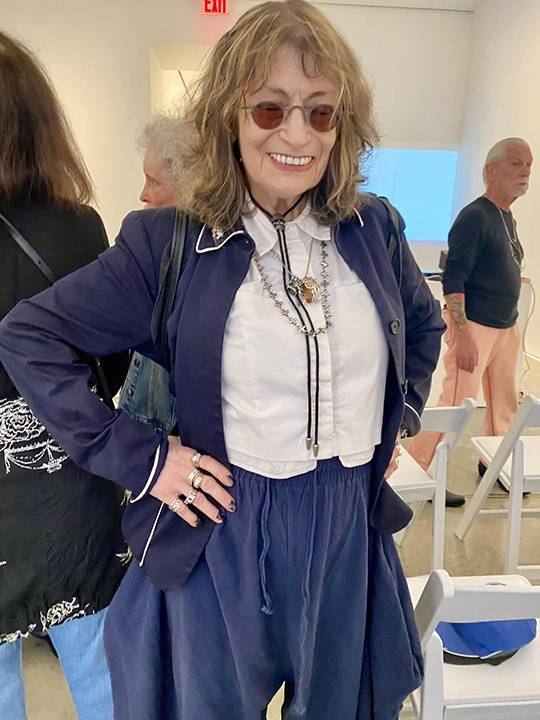
A few years ago, Atanasio De Felice brought Marcia and her long-time collaborator Victor Bockris, to hear me speak at the Poetry Project at St. Mark’s. Subsequently, Marcia featured at a celebration of the five year anniversary of Howl! and Live Mag! working together. She showed a film by Ron Mann from 1985 called “Marcia Resnick’s Bad Boys.” The list of names was like a pantheon of outlaw legends. Marcia met them as equals, as collaborators — characters that defined an era of cultural regeneration.
Alan Vega, Jim Jarmusch, Richard Hell, Nicholas Ray, HenryRollins, Gary Indiana, Divine, Kinky Friedman, Marcus Leatherdale, Andy Warhol, Legs McNeil, Anthony Bourdain, Tom Verlaine, Joey Ramone, Abbie Hoffman, Garland Jeffreys, David Byrne, Mick Jagger, Gerard Malanga, Allen Ginsburg, John Belushi, Kenneth Anger, Jackie Curtis. Klaus Nomi. Victor Bockris.
Ah, Victor Bockris. Victor was writing for High Times and helped Marcia set up many of the Bad Boy shoots. One in particular included William Burroughs, Mick Jagger, and Andy Warhol.
Marcia ran with the fast set and it slowed her down in some ways. The portrait book project wouldn’t be published for over twenty years. She had struggles with drugs. She skipped teaching her classes sometimes. She put out a couple of other small photo books but never really followed up on the brilliance and promise of her original, groundbreaking suite of ReVisions.
It’s somewhat tragic considering the lack of recognition and opportunities that could have risen. But Marcia survived and came back when many did not. She came with immense presence, offset by her soft touch, soft voice, quick to smile, eye fire. Her demeanor established an intimacy. A personal touch. And she was a touching figure too.
.
Victor helped Marcia get it together and provided text to accompany her Bad Boy portraits. They finally put out the book (for which she is probably best known), Bad Boys; Punks, Poets, and Provocateurs, 1977-1982. He was devoted to her and they had a unique, productive partnership.
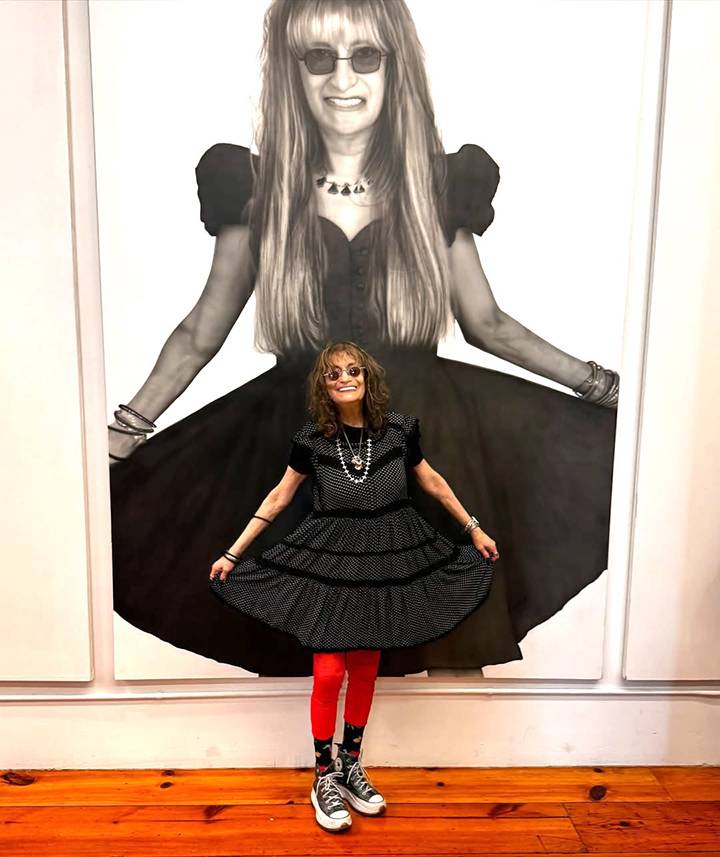
Like another friend, Colette, Marcia was both an artist and a living act of art. Her style was bold—each finger sporting a ring. Bangles and bangs. She wore Converse sneakers and wicked witch stockings. Black leather and flouncy skirts.
She invented a way to be art, whether behind the lens or in front of it. Her signature pose in her tricked-out get up, was a demure curtsy. Dustin Pitt photographed her at her last opening in the pose. Curt Hoppe painted her holding out her skirt to each side. Aldo Hernandez took a photo of her repeating the pose in front of Curt’s portrait at Howl!. True royalty. She was a gracious monarch who inspired love, loyalty, and liberty.
The poet Max Blagg described Marcia as a “beautiful wild spirit.”
“Around the corner on Canal,
Marcia R, tiny volcano, powered by hand,
documented the Mudd Club mob
in her white night light studio.
All the lost boys paused in their cavorting
and submitted to her all-seeing eye.
Everything mattered.”
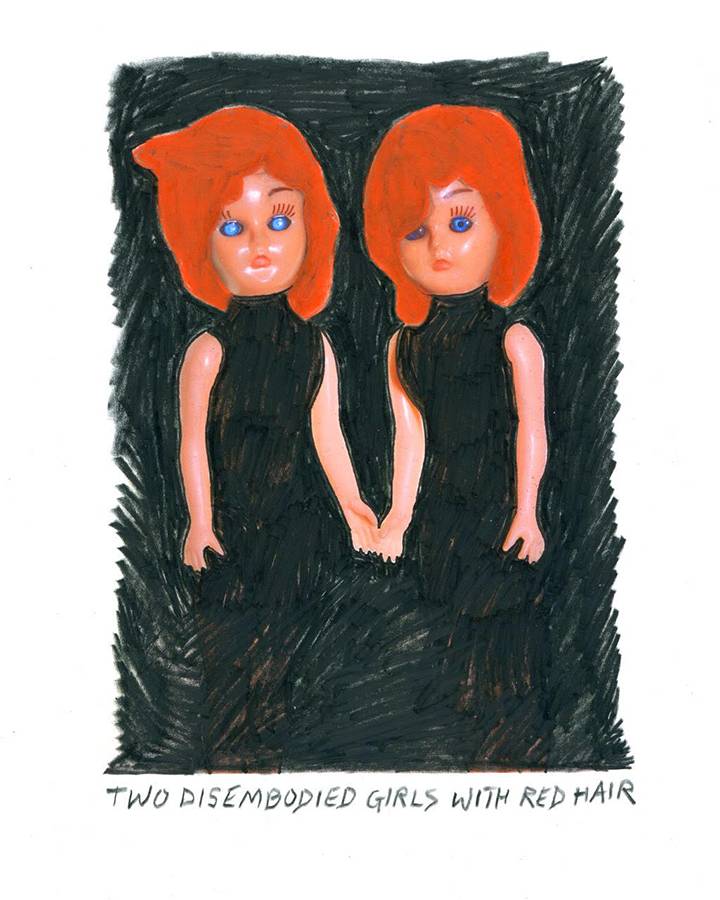
Her career came full circle in a way. Her last show at Deborah Bell included new work, using dolls as subjects. She went from a coming of age to framing another kind of passage. In the last few years, Marcia returned to pairing a photo with text. Her final subject was dolls. She had a collection which was documented in a photo portrait by Bob Krasner. The final five works I know of, each show a pair of dolls that were photographed and then painted on. At the bottom is a handwritten line of text.
The dolls represent a transitional space, between youth and age, between the imaginative and the actual. Marcia’s art makes a space between states — that is her statement. She opened a new way of expressing the void we all carry. She created a twin/ alter ego to keep herself company. In “TWO DISEMBODIED GIRLS WITH RED HAIR,” the black dresses lose their edges and merge with the background, much as Marcia merged herself with the scene.
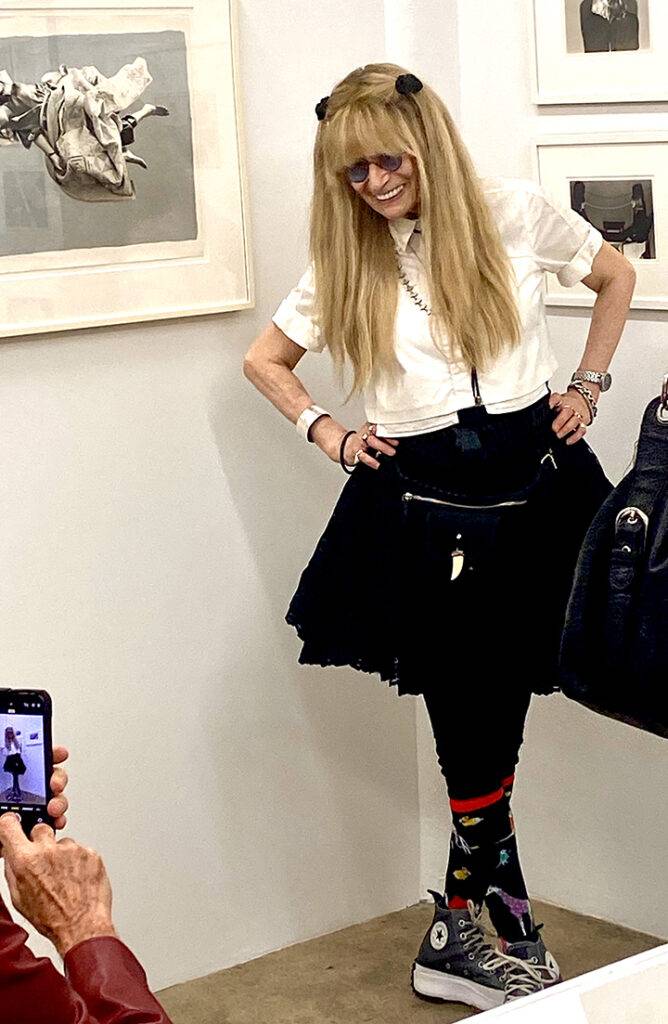
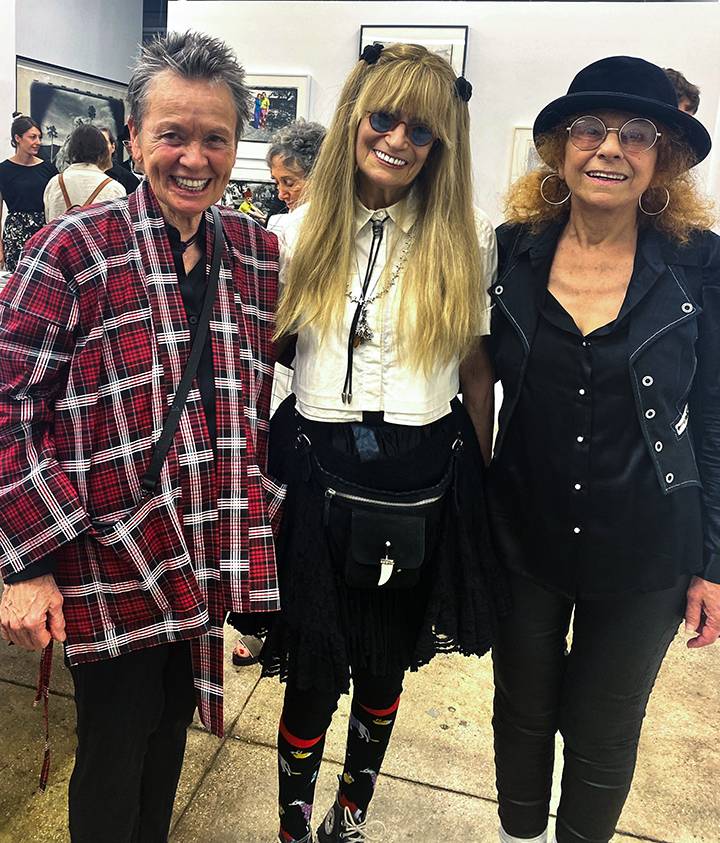
Marcia was an undisputed queen of the scene. When she came into a room, people wanted to have their picture taken with her. She was fun. She had a signature smile, genuine and intimate. She was a walking event. In the age of spectacle, she provided a classy model of decorum, stardom, and perpetual self-invention. I miss her “bad.”
Marcia Resnick is represented by Deborah Bell in New York and Paul M Hertzmann, Inc., San Francisco.