Family dramas have been a staple of American theater at least since Eugene O’Neil thought, Hmm, maybe I’ll write something about blustery old Dad, woeful old Mom, and that doomed brother of mine.
The genre doesn’t appear to be in danger of disappearing anytime soon. And, at times, it seems that the more dysfunctional the onstage family is, the more audiences want to settle in and savor the rancor. And that sort of makes sense. As we watch such plays, how many of us find ourselves comparing and contrasting the author’s characters with ourselves and our own family members, pondering whether we’re doing considerably better or measurably worse than the people onstage?
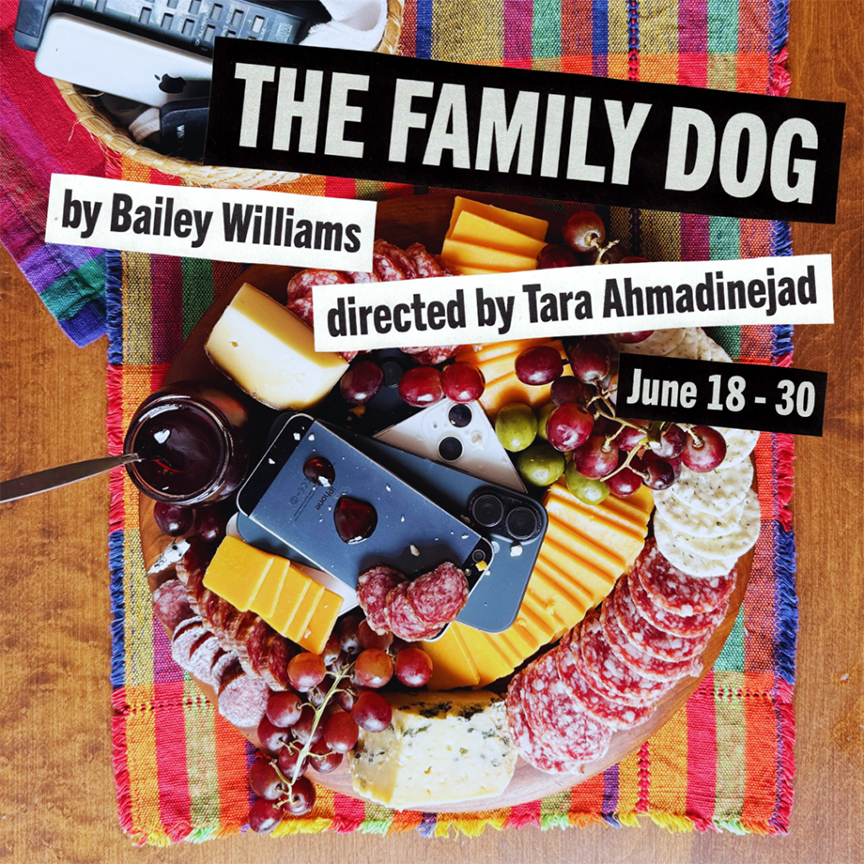
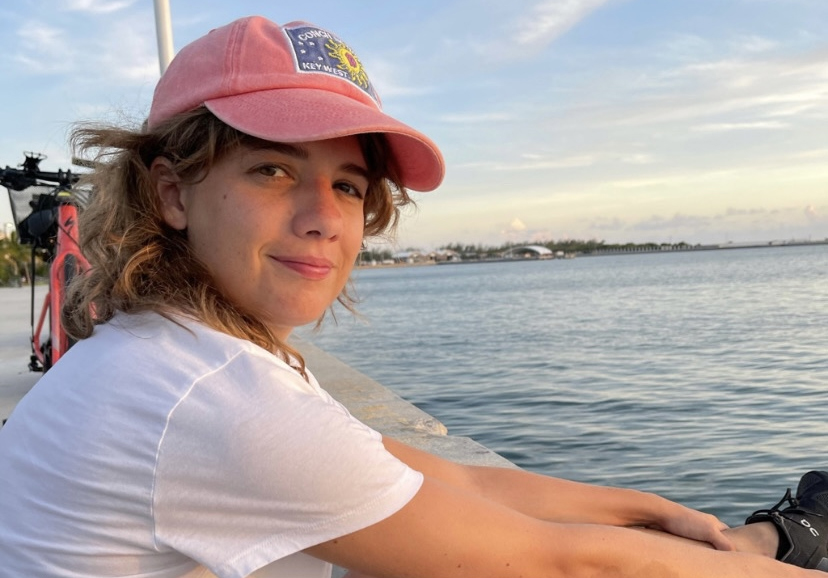
This month, playwright Bailey Williams gets into the act. Her new play, The Family Dog, directed by Tara Ahmadinejad as part of Clubbed Thumb theater company’s Summerworks series, will play June 18–30 at wild project in the East Village. It’s a personal if not quite autobiographical work about a Trump-era family with four grown children, all teeming with prickly grievances. The play is narrated by an ailing (possibly dying) canine with a wry take on the humans in his life.
Houston-born Williams has explored various dramatic genres in the last few years. I thought I would die but I didn’t (2019 ) was her true-crime drama, Events (2022) her workplace comedy. 2024’s Coach Coach (commissioned and staged by Clubbed Thumb) was originally conceived as a murder mystery but wound up being a dark, haunting comedy about a group of life coaches at a weekend retreat.
The Family Dog, however, seems to be her most personal project yet.
Finding her way
In a phone interview, Williams told me that her playwriting career began–suddenly and auspiciously–when she was a teenager living in Denver.
“My high school theater teacher knew I liked to write – that I was always writing little stories. She saw an ad in some magazine for a youth playwriting competition. She encouraged me to enter it, and I did. And I won! That sort of started the whole playwriting thing. I found this youth playwriting program in downtown Denver through Curious Theatre. And I just fell. I fell in love.”
She continued her studies in dramatic writing as an undergrad at NYU, but, coming from a suburban background, she experienced some difficulty adjusting to NYC living, which she found overwhelming. She took a break from writing scripts at one point, accepting a job in the NYC office of a German literary agent, Antje Oegel, who represented some of Williams’ “absolute idols,” including Jackie Sibblies Drury, Branden Jacobs-Jenkins, Mia Chung, and Young Jean Lee. She went to see theater on behalf of the agency six or seven times weekly. When Oegel decided to return to Europe, Williams considered an offer to take over the office in New York. But by then, she was ready to recommit to her own work.
One of her earliest projects to be staged was Buffalo Bailey’s Ranch for Gay Horses, Troubled Teen Girls and Other: a 90-Minute Timeshare Presentation. She performed onstage herself in this absurdist-y work, which was produced at the Exponential Festival in 2018.
“It was a hero’s journey, stuck inside a timeshare presentation for a fictional ranch that I ran,” she explained. “It was sort of a sneaky way of talking about the commodification of queer spaces… [That period of time] was kind of the height of Bud Lite Lime slapping their name on parades: ‘Yay, gay people!’ That didn’t last too long. Now [the show] is kind of a vintage piece.”
Eventually, Williams went back to school (Brooklyn College) to earn her MFA in playwriting. Her classes moved to Zoom once the pandemic broke out, but the curriculum helped her greatly, and she managed to bond with classmates in spite of the remoteness.
“I didn’t have the chops to really drive the creation of more and more plays before I went to grad school,” she added. “They taught me how to actually sit down and keep going – to write through blockages and the feeling that I don’t have any ideas. I loved grad school.”
Dog’s eye view
The Family Dog came about rather quickly. Williams began writing it only a year-and-a-half ago.
Besides having work produced at Clubbed Thumb, she serves as a “script wrangler” for the company. This is a part-time quasi–literary management gig that consists largely of reading submitted playscripts. But when the company was planning a 2025 biennial commission of work inspired by the late playwright Christopher Durang, Williams had occasion to study his work in depth. She had never before truly understood Durang’s sensibility, but on returning to his plays, she found brilliance in them: “I started to see myself in that work in a way I hadn’t when I first visited it.”
And then, inspiration struck:
“I’m very different from my family. Sometimes I feel very much like the black sheep. So I went home for Christmas that year, and I was watching my family. And it felt like I was in a Durang play. I thought, I have to try to capture something of this feeling and this rhythm of being in this mass of people [Williams has five siblings], all of whom are in their thirties, with my parents, who are in their sixties. And we’re all doing the same thing we’ve always done, thirty years on – and with this new edition of our dog, in whom we put all of our hopes and dreams and meaning…. So, I was looking at this dynamic, and I just started to hear the play.”
At the time she was constructing the script, Williams also had occasion to immerse herself in the plays of Edward Albee.
“I felt like I had the two playwright-parents of this script that I needed,” she said. “The silliness and dark comedy and deep wounds of Christopher Durang…and the meanness and the sense of reality kind of warping underneath people of Edward Albee.”
She knew from the start that her canine character, Johnny, would be central to the play. She envisioned him as an aged, hard-bitten rock musician. She notes that the family members in the play lavish Johnny with love and caresses, something one doesn’t always have permission to do with human beings.
(NOTE: Bruce McKenzie will portray Johnny in the production. Other cast members are Ethan Dubin, Andrew Garman, Brendan George, Talene Monahon, Sarah Steele, and Jennifer Van Dyck.)
Hitting the jackpot
Williams submitted the script to Maria Striar, Clubbed Thumb’s artistic director, and a reading was arranged to hear how it sounded.
As she began telling me about this reading, Williams broke into laughter.
“They asked me if I wanted to do it. Right there!” she marveled. “That never happens. But it happened, this year, to me, and I’m gonna take it.”
To add to this good fortune, her first choice for director, Obie winner Ahmadinejad, agreed to take the job. Ahmadinejad has worked largely with the Piehole theater collective, but she had two strong directing credits for Clubbed Thumb: Liza Birkenmeier’s Grief Hotel and Adrian Einspanier’s Lunch Bunch. Williams knew Ahmadinejad socially, but the two had never previously collaborated.
I spoke on the phone with Ahmadinejad on the same day I interviewed Williams. She talked about the qualities of the script that attracted her. “There’s a lot of comedy and humanity and recognizable family stuff going on,” she said, “and then it goes somewhere unexpected.”
Ahmadinejad told me that she considers it an “honor” to work with someone on a script that comes from such a personal place: “It’s juicy and exciting to explore…but it [also] speaks to a certain kind of pain that a lot of people grapple with.”