Like many New Yorkers of a certain age, I have fond memories of the Amato Opera. In a tiny, 107-seat theater on the Bowery, across the street from the punk club CBGBs, the Amato presented half a dozen operas each season with priceless zeal at a price—$35 a ticket—almost anyone could afford. Operas were staged on a shoestring—old mops became wigs, cascades of raw oatmeal became snowstorms, and for many years the casts of mostly amateur singers were paid in meatballs cooked by the founder Anthony Amato, whose wife Sally sold cookies in the lobby during intermission. But what the Amato lacked in glitz it made up for in ardor, and I consider myself fortunate to have seen one of the last performances of La Boheme there before it closed it 2009.
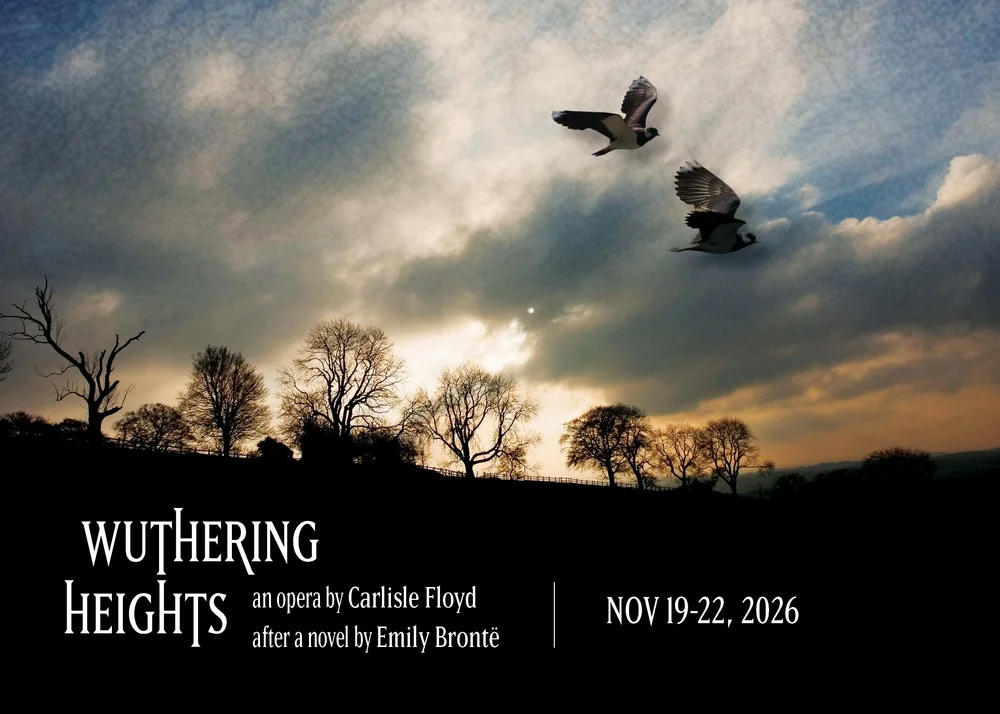
Today, the Little Opera Theater of New York carries on the Amato’s legacy with a level of polish and prowess Anthony and Sally Amato would certainly have applauded, and still at a price—$30-$60—almost anyone can afford. The company’s virtuosity will be evident later this month (November 19-22), when they present Carlisle Floyd’s rarely performed opera Wuthering Heights, based on the novel by Emily Brontë.
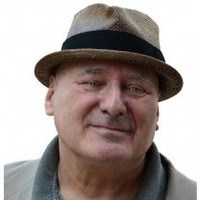
Philip Shneidman, the company’s avuncular founder and artistic director is passionate about all opera; but particularly, operas either composed or easily adapted for smaller venues. “We’re not trying to replace the experience of going to the big opera house,” he says. “I love the Met. I love a big, full-course opera, but this is a different way to experience it.”
“We’re bringing opera closer to its origins,” he adds. “In Italy, the original operas were performed for friends in people’s living rooms. Of course, they were living rooms in palaces but still small compared to LaScala.”
Provincetown Playhouse an influence
Shneidman’s inspirations were Benjamin Bretton’s English Opera Group, a chamber opera company formed in 1947 to present new works by British composers, and the Provincetown Playhouse, a legendary 88-seat theater on MacDougal Street, which launched groundbreaking plays by Eugene O’Neill, Rachel Crothers, and others in the 1920s.
That set a high bar, but since its founding in 2004, the Little Opera Theater has established a solid place for itself in the cultural life of New York, staging two or more performances a year, including four New York premieres and two U.S. premieres, at venues throughout the city.
A Modern Score for a Gothic Tale
The selection of Carlisle Floyd’s Wuthering Heights is typical of Shneidman’s dedication to producing lesser-known or less-performed works by major composers. The opera premiered in Sante Fe, New Mexico, in 1958, was performed the following year at the New York City Opera and hasn’t been seen since.
Floyd’s most famous works, like Susannah and Of Mice and Men, are set in the American heartland to music that echoes traditional melodies, albeit with 20th-century modern tonalities, rhythms, and textures. Wuthering Heights, Emily Brontë’s gothic tale of doomed love in the wild, untamed English moors, thus, was an unusual choice for Floyd. Yet he regarded the finished opera as one of his best. The plot of the libretto is based on the classic 1939 film with Laurence Olivier as Heathcliff and Merle Oberon as Cathy, but Floyd borrowed much of the dialogue from the original Brontë novel.
As the story unfolds and the ingénue Cathy must choose between a wealthy marriage and her love for the dark, brooding stable hand Heathcliff, the music drives the drama and challenges the performers. With few melodic intervals, it’s discordant, foreboding, and raw.
“It’s not easy,” says soprano Vanessa Isiguen, who alternates nights with Sara Kennedy in the demanding role of Cathy. “There are weaving tonalities and abrupt harmonic shifts. I think Carlisle Floyd did that on purpose to demonstrate the unrest that these characters are experiencing.”
An Intimate Musical Experience
You won’t need opera glasses to see Wuthering Heights. “The experience of opera in a small theater is very intimate and tactile,” says Shneidman. Sara Kennedy agrees: “Being so close to the performers, the audience can see a deep breath, a raised eyebrow, a soft smile. We can do much more with gestures and expressions that the audience would miss in a 3,000-seat theater.”
The small venue also gives the singers more license to explore dynamics, Isiguen explains. “You can really pull back your pianissimo and go a lot softer because you know everyone will still be able to hear you. On the other hand, our voices are louder in a smaller space. It will be fun to sing those high notes and just let them rip,” she laughs.
Creating the sets for a small stage was the job of scenic designer Clair Karoff, whose use of projections and lighting establishes the landscape of the moors as a constant presence— “almost like another character,” she says and intriguingly adds that her abstracted renderings of 19th century interiors will subtly convey that Cathy and Heathcliff are “caught in the net of their lives.”
Acute Attention to Details
“What excites you most about staging a new production?” I asked Philip Shneidman. “I like collaborating with the designers and the singers,” he replied. “I hate being in the office. I’d much rather be in a rehearsal room. That’s the fun part.”
“And what keeps you up at night?” I asked.
“Everything,” he replied.
With less than three weeks to go before opening night, I’m in a rehearsal room at Pearl Studios in midtown, watching as Shneidman walks cast members through a passage from the beginning of the second act of Wuthering Heights. Cathy has returned from a stay with their wealthy neighbors the Lintons dressed in uncharacteristic finery and has snubbed Heathcliff, who is unkempt and sulking in the kitchen with the housekeeper Nelly.
The scene is a small fragment of the whole story but presages much of what’s to come, as Heathcliff plaintively sings “Nelly, make me decent. I want to be good.”
Cathy will become a lady, and Heathcliff will become a gentleman, but they will lose themselves and each other; heartbreak and death will haunt the desolate moors.
In the rehearsal studio, actions are meticulously coordinated with the music, using chairs as props to block out the scene; Wayne Hu as Heathcliff and Margaret Lattimore as Nelly make almost imperceptible (to me) corrections to notes and rhythms in the music; and Philip Shneidman fine-tunes their cues and coaches their dramatic gestures and expressions. It’s painstaking, repetitious, hard work but the love and joy of all involved is abundantly apparent. They are, indeed, having fun bringing this tragically sad opera to life.