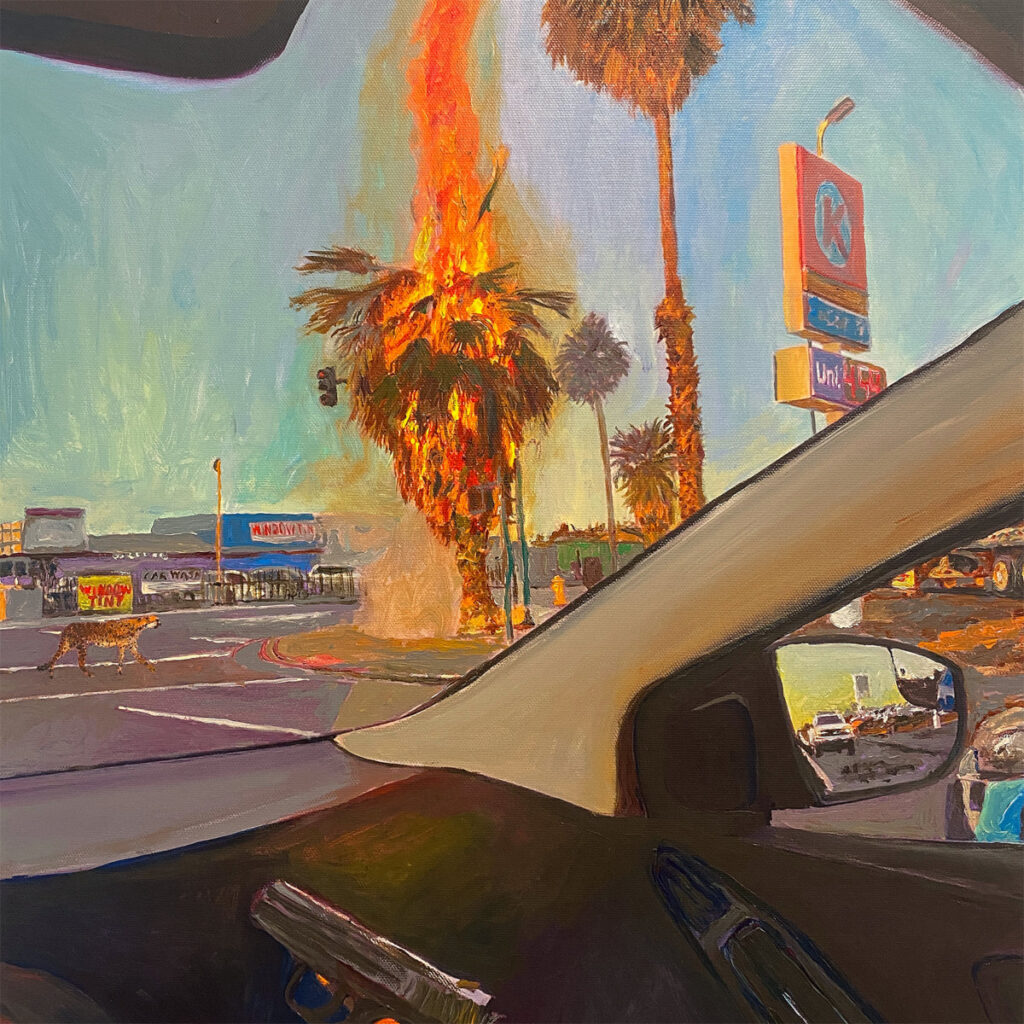
Heat in the moment. Bendix Harms’s 2018 painting My Sun depicts a night scene in thickly applied, black and yellow paint, the sun a catlike globule exploding and illuminating the city street. Brenda Goodman’s COVID 3, one of a series of pandemic-era paintings, shows a hunched figure entering a building, stick-legged and perhaps carrying a weapon. Her COVID 5 looks like a Philip Guston portrait, but with the huge brain and the thoughts it contains exposed. A new work by Steve DiBenedetto, Center of the Margin of Error, shows an eye rising into the night sky, elevating above a colorful tent. The paintings are part of a show up at the New York Studio School in Greenwich Village through Oct. 18. The exhibition, This Heat: Brenda Goodman, Steve DiBenedetto, and Bendix Harms, takes its name from a pillar of British post-punk “whose music carries the psychic pressure of making something in a world that offers no guarantee of permanence or meaning, while insisting that the attempt to make it still matters,” according to the gallery release.
The paintings are foreboding, urban, slightly comic. But are they punk? or post punk? Sure, why not? “Punk” is an appellation for selling just about anything anymore, and “post punk” means what? Rhythm guitar? In truth, punk lasted about six months and post punk had already started by then. The rest is just marketing. But back before punk was popularized, a trio from London burned bright. This Heat was intelligent, edgy. Along with Gang of Four and, later, Wire, they made punk sustainable by bringing that beat back, making cerebral dance music that hurt just a little. Their flame glowed for about five years; the members remained active after the band flickered out. (They did return, less one fallen member and with an expanded lineup, as This is Not This Heat and played Pioneer Works in Red Hook in 2018.) The band might be described as somewhere between abstract and figurative, representational abstraction, or even, if we might be so bold, abstract concrete. That last qualifier is borrowed from the name of This Heat drummer Charles Hayward’s newest band.
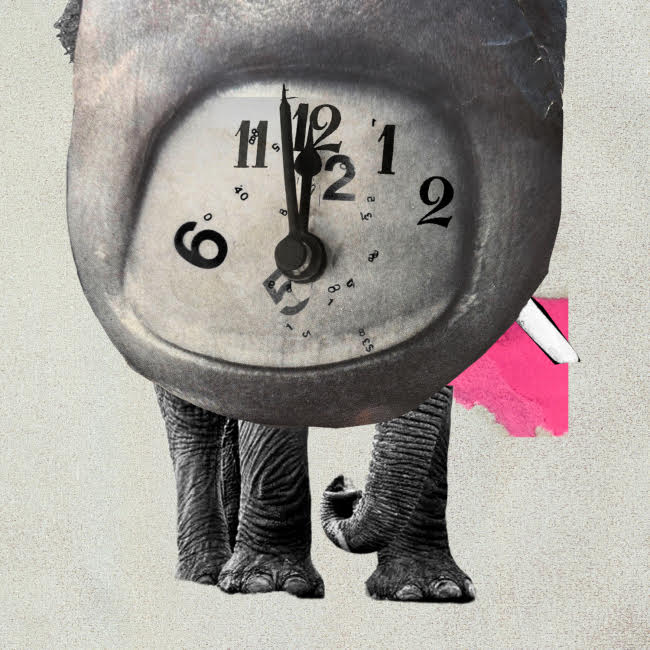
At 80, Hayward is still at it, with numerous projects under his respectable belt. In 2023 he introduced the five-piece Abstract Concrete, whose second album Guilty Buildings (LP, download out Nov. 19 via state51 Conspiracy) holds true to the danceable punk ethos—the droning melodies with backbeats, the vague, urban paranoia—if now with more of a pop leaning. Vocals are shared by Hayward and violist Agathe Max, with deft guitar work by Roberto Sassi (a veteran of Glenn Branca’s electric guitar orchestra). Few could make a lullaby so ominous as their “You Will Be Happy,” and in the sparsely cluttered, slow and nervous, start-and-stop “Big Ben,” Hayward and Max sing about the rooftops of London, the sins of the father, and taking one’s time. It’s so ambiguously vivid, it could just about be a painting.
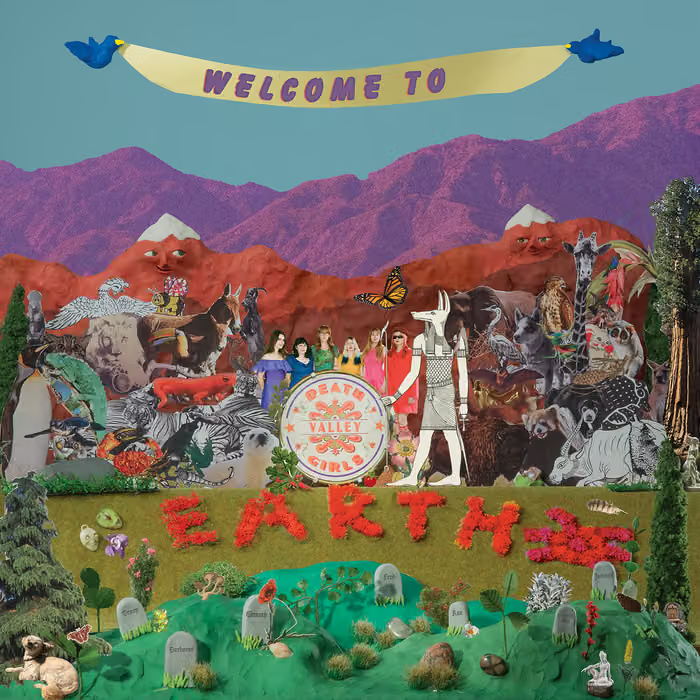
A new earth, after the fire. Over the dozen years since their debut album, Death Valley Girls have grown from a punk band into their own contemporary West Coast psychedelia. Singer and sole constant member Bonnie Bloomgarden grew up in Los Angeles and bears the name of a flower child. She suffered serious loss last year when the Eaton Fire claimed the life of her dog and her home on the outskirts of LA The tragedy, and the camaraderie she found in its wake, are at the core of Welcome to Earth (CD, LP, download out Oct. 23 from Suicide Squeeze). It’s their most fully realized album to date, grounded while still in the cosmos of 2023’s Islands in the Sky (cf. “When I’m Free,” “It’s All Really Kind of Amazing”), with nods to punk and a decided pop sensibility. The new line-up is a strong one, making for a band album more than singer-with-backup. Under a reverb wash of organ, guitar and voice, a solid rhythm section, and clean sax lines that recall Lora Logic in her X Ray Spex days, lie some strong songcraft. From the exultant pop of “Basic Witch” (the video for which includes an appearance by LA punk grandmammy Exene Cervenka), the bashing rave-ups on “Plant Magic,” the rousing “I Love You” to a worthy cover of Link Wray’s “Fire and Brimstone” and the concluding 1-2 punch of “Life So Far” (a surefire saloon sing-along) and “How Losing Everything in the Fire Taught Me to Love Myself,” it’s a 25-minute rush of perseverance and survival.
And the poet you rode in on. On the scale of John-Lennon-Scream-Your-Sincerity to David-Bowie-Reinvent-With-Impunity, Long Island native Caroline Rose works both sides of the balance. They’ve been acoustic singer-songwriter, disco rebel and moody electro indie (while being actively involved in labor organizing for musicians and venues). Bits of all that genre-hopping are in the new Gentling the Horse at the Walt Whitman Mall (CD, LP, download out Oct. 23 on their own SUCK Records), but mostly it’s a record of impassioned, irreverent bashing with a touch of psychobilly. When they sing “1-2-3-4-5-6-8 / When we’re in hell we’ll all be gay / 1-2-3-4-6-6-6 When we’re in hell, we’ll all be rich,” you know they mean it, even if you’re not sure what they mean. Rose slows things down on “Notes to Teenage Self,” a heartfelt, acoustic confessional of adolescent anxiety that breaks from the badassery of “Cement Head,” the broken bliss of “Calm” or the race to the middle of “Goddamn Train.” Whether through posturing or projecting, Rose has made an album of smart, driving and sometimes quite funny tunes. And hey, PJ Harvey has gone through plenty of ch-ch-ch-changes too.
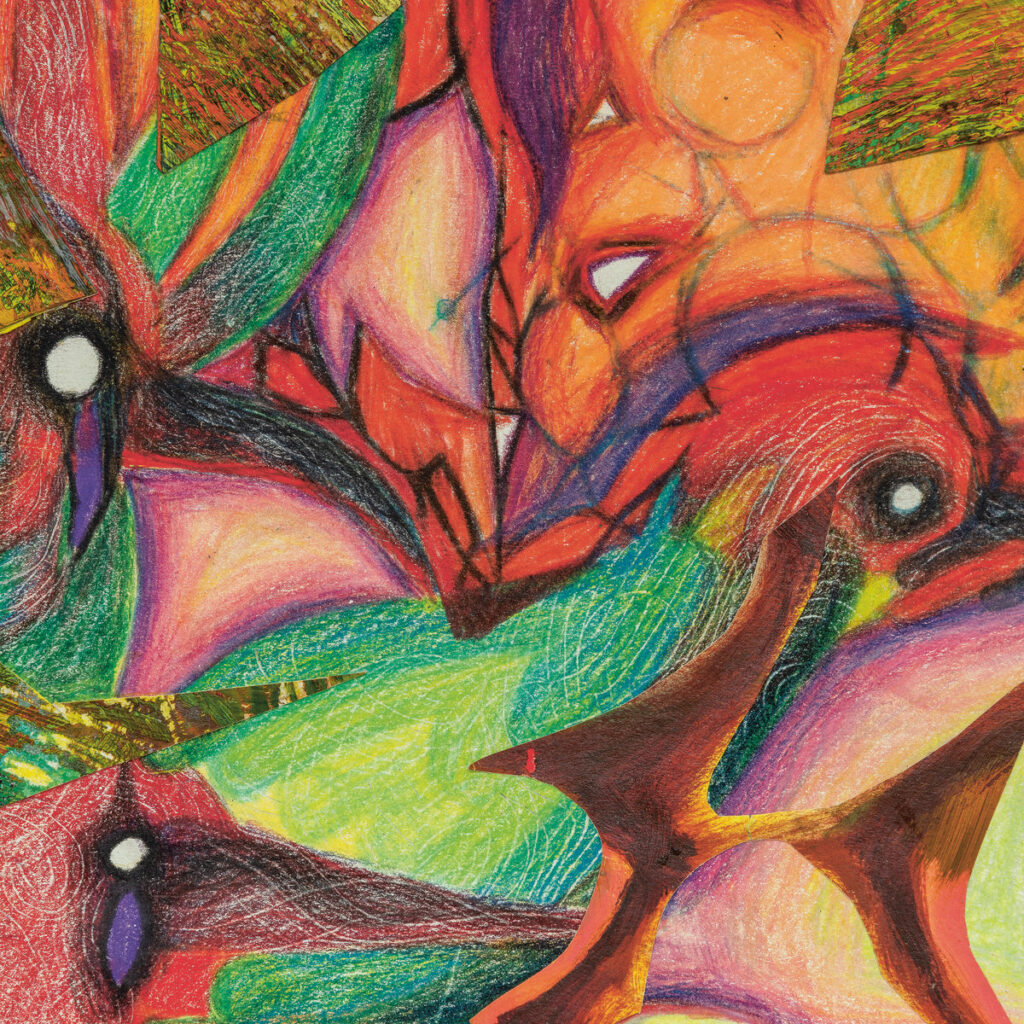 The busy patterns of still waters. For 20 years now, the remarkable Japanese trio Kukangendai has exhibited a fantastic, unshowy precision, a practiced machinery descendent of the prog-punk of Tatsuya Yoshida’s Ruins but with dialed-up complexities (not unlike Baltimore’s Horse Lords). They’ve stretched the formula further at times, collaborating with the great Ryuchi Sakamoto and the avant hip hop outfit Moe and ghosts, but they’re at their hypnotic best when they’re on their own. The new Banquet Wheel (LP, download, Oct. 2 via Mariontte) is more subdued than past simmerings, and possesses a strange beauty. Guitarist Junya Noguchi and bassist Keisuke Koyano play entirely acoustic—the latter adding occasional harmonica—and drummer Hideaki Yamada employs soft mallets much of the time and cymbals at a minimum. There are moments of momentum, but often the music is more like small scurrying, like insects on a pond’s surface under a magnifying lens—or rather, a binaural microphone, providing a wide and clean sound field. It’s not a calm record, but it is a quiet one. Below the pond’s surface (if we might belabor the metaphor) lies the music of Nickolas Mohanna and an even more deceptive album of acoustic instrumentals. The six tracks on Whistler (self-released LP, download, Oct. 2) originate in piano and guitar but build through heavy processing into dense atmospherics with supplemental drums on by Greg Fox (formerly of Liturgy and Zs) and Ryan Jewell (Folk Implosion, Chris Forsyth, Psychic Temple), and filmmaker Jef Mertens on Nagoya harp. There’s a good bit of pent-up energy in the soundscapes—not quite ambient, not quite drone—but there’s also something inexplicably refreshing in the moments when the electronic wash recedes and an undercurrent of finger-tapped guitar emerges. There’s nothing quite hummable here, but the upside is you can whistle along however you please and it will probably work.
Everyone knows it’s Wendy’s. Has Wendy’s commercially co-opted the Association yet? Not that I know of, although it’s natural. But the burger joint chain now has a half dozen of its own songs. Songs to Listen to in a Wendy’s Parking Lot was released to streaming services on Sept. 23, and it’s actually somewhat enjoyable. “She Said She Didn’t Want Fries,” (by Matty Mullins of Memphis May Fire) is a classic song of fast food betrayal and “Salt in the Wound” (Chloe Kinnon of Winona Firefighter) is a bitter rejection from Wendy herself. The jokes do run a bit thin but Kat Leon (Holy Wars) brings it home with “My Frosty’s Funeral”: “Left without a warning, only mourning as the bottom was revealed / That treat was special, existential, but there’s an end to every meal.” TBH, the rote emo punk of the six songs isn’t really my cup of Frosty, but it works on repeat while reading Joe Wenderoth’s brilliant, spiteful Letters to Wendy’s. In the parking lot, of course.