
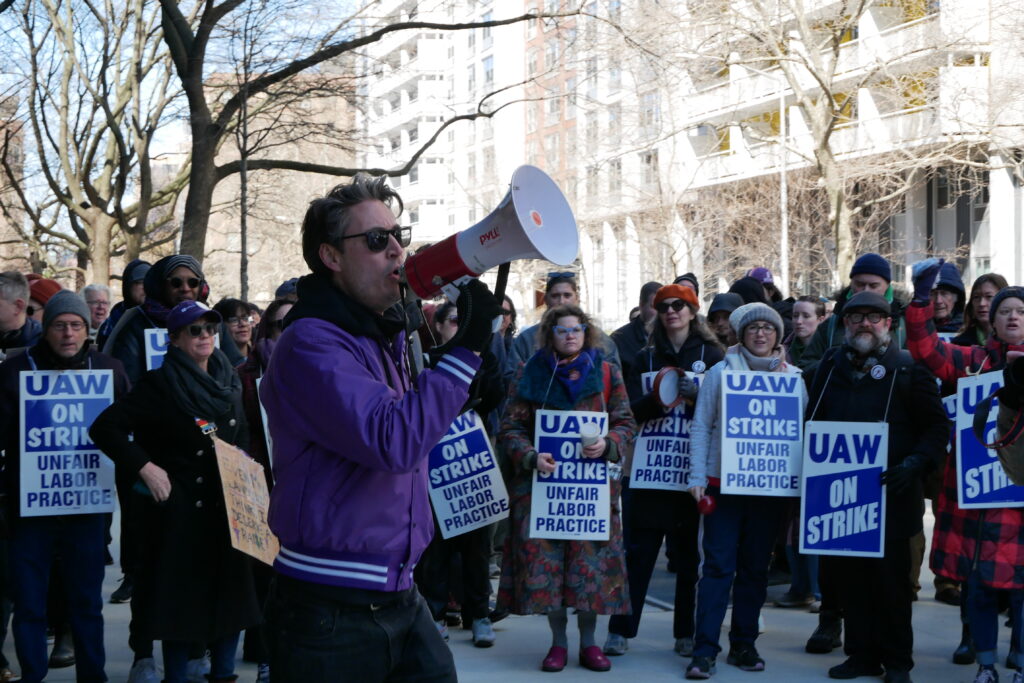
After 17 months of negotiations and two days of striking, almost 1,000 non-tenure track faculty at New York University agreed to a contract with major upgrades to their pay and benefits.
In an email to its members just before 2 a.m. Tuesday night, the union’s bargaining committee announced a tentative agreement with the university that would guarantee them the highest minimum salaries of any unionized, full-time, non-tenure track faculty in the country.
The union, Contract Faculty United-UAW, also won a slate of benefits like improved job security, paid sabbatical leave, and provisions like academic freedom and shared governance of the university.
“We won in the last four days more than what the administration had agreed to in the previous 17 months,” the email read. “These gains are the direct result of tireless organizing for over nine years, nearly a year and a half of bargaining, and our powerful strike threat, in which a majority of all contract faculty had signed up for picket shifts and participated in our strike.”
The union has been bargaining for its first-ever contract since late 2024, and its 58 proposals boil down to one request: Equal pay and treatment for all faculty, regardless of tenure status.
Contract faculty make up half of NYU’s full-time teaching staff, but earn 36% less than their tenure-tracked peers, according to Jacob Remes, an interdisciplinary professor and member of the union’s bargaining committee.
NYU has created a “two-tier faculty system,” said Sarah Ema Friedland, a film, media, and writing professor who joined the picket line Tuesday. “We do almost the same exact job as tenure stream faculty, and we get paid significantly less and have less benefits. And, our teaching and our working conditions affect the quality of education that we’re able to deliver to our students.”
Non-tenure track faculty also serve in advising, researching, and administrative roles, Remes added. “We do the non-teaching work that makes the university run,” he said.
So far, the two sides have tentatively agreed to over 40 union proposals. This includes major priorities like guardrails on AI usage—ensuring classes are designed and taught by humans—paid leave and sabbaticals, support for housing costs and access to faculty housing, retirement benefits, academic freedom, and a commitment to not censoring library materials. To end the strike, the union did withdraw one key demand: Support for housing costs and access to faculty housing currently provided to tenured faculty.
Contracted faculty will see an average raise of 20% next year, with at least 95% earning over $100,000 and no salary below $91,000, the union said. Members will get a raise of $14,000 or more next school year, and a 3.5% salary bump each following year. These numbers reflect a compromise for both parties: the union had pushed for raises of at least $18,000 next year, and administration had countered with 10,000.
In a big win for the union, the new contract would also guarantee “substantially larger raises” for the union’s lowest paid and longest-serving members, the email states. A simple salary floor raise was insufficient, said organizing committee member and English professor David Markus.
“There are folks here who make the same amount of money that I make, who’ve taught here for three times as long as I have,” he said. “Admin is finally recognizing that that’s demoralizing, that it’s bad management 101, and that it fails to recognize the service, commitment, and loyalty that our longest serving faculty members have shown to this university.”
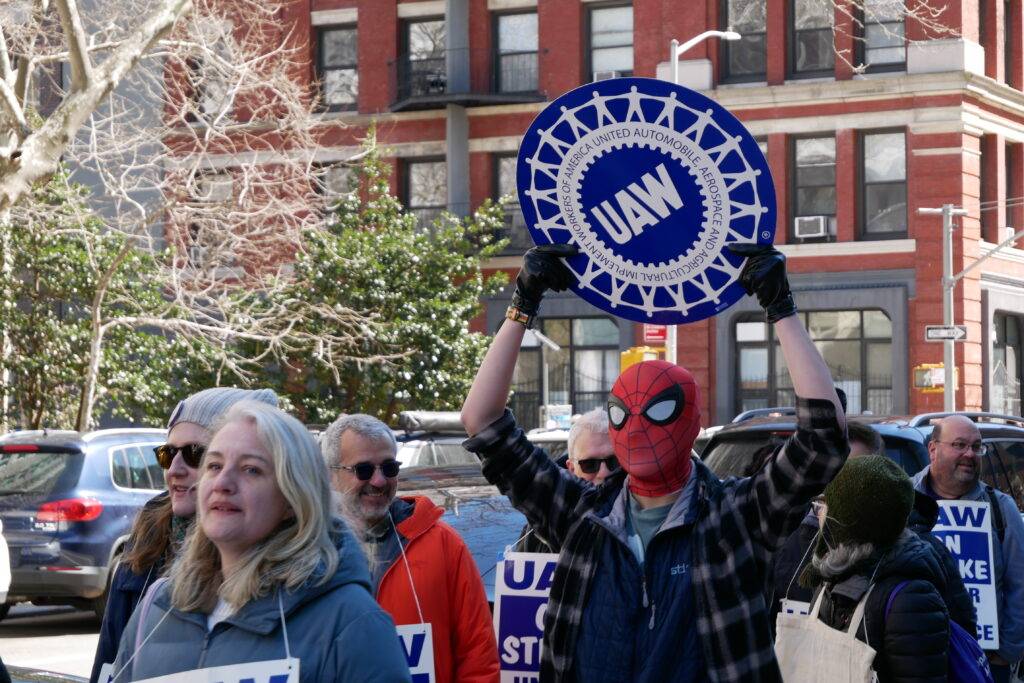
Frustrated by a lack of progress in bargaining, CFA-UAW membership voted to authorize a strike in late February. Negotiations ramped up last week, culminating in a 26-hour session that bled deep into Monday morning. The union gave administration an 11 a.m. deadline that morning to send a contract proposal, but rejected NYU’s 10:53 a.m. submission. Minutes later, contracted professors walked out of class and formed a picket line outside the John A. Paulson Building on Mercer Street.
“This is not something that we did lightly,” Remes said, adding that his peers were reluctant to leave their students. “There’s a reason that we waited 17 months to take this step; nobody wanted to do it.”
NYU spokesperson Wiley Norvell called the strike “fundamentally unnecessary” in a statement Monday, saying the union was “disrupting” the education of thousands of students despite receiving a “market-leading offer” featuring “significant” raises and benefits. He said the union’s refusal to bring in an outside mediator hampered progress.
Markus pointed the finger back at NYU. “If the administration claims that they want continuity, that they don’t want to disrupt their students’ lives, then they could have settled months ago. There was no reason for it to take this long,” he said.
Almost 70 local elected officials expressed their support for the union in a letter to NYU President Linda Mills on March 20, following a similar letter signed by 250 tenured and tenure-track faculty in December.
Remes said he also felt the love from his students, who sat in on meetings, signed onto a letter with over 2,000 peers calling on a fair contract, and came to support their striking professors.
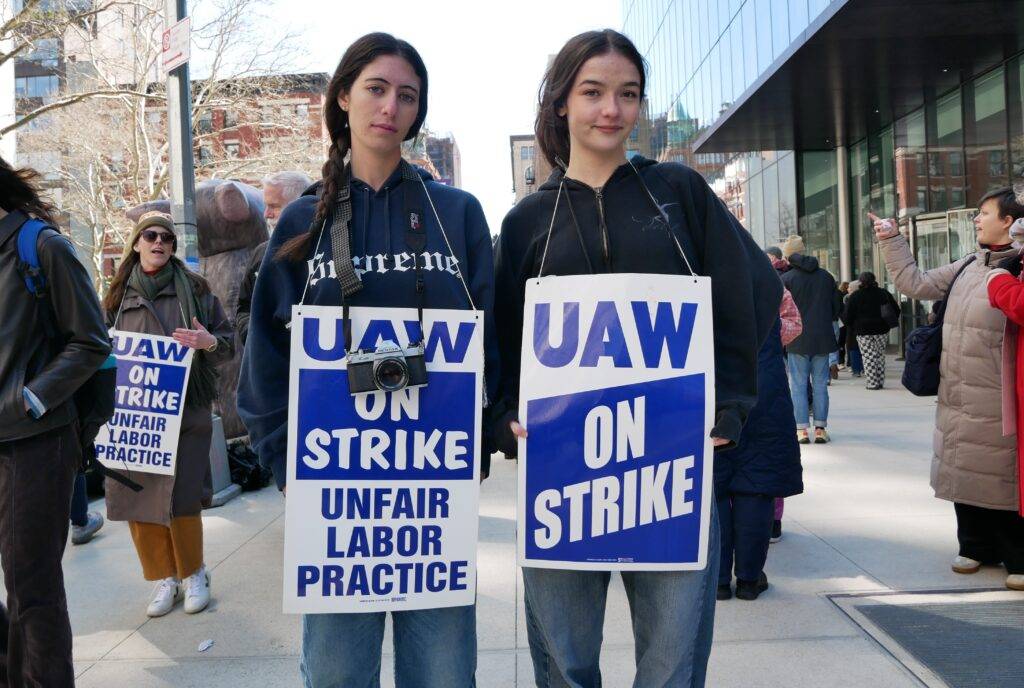
Betsy, a freshman photography student, joined the picket line Tuesday morning with her friend Eliana.
“I really love my professors, and it’s important to be in solidarity with them,” she said. “And I think that student voices also put a lot of pressure on the administration to come to agreements with these contracts quicker. The louder our voices are, the more change can happen.”
CFA-UAW’s strike joins a city-wide wave of student and faculty organizing. Part-time faculty at The New School went on strike in 2022, winning a new contract with increased pay and benefits, and faculty and student worker unions at the university are currently fighting widespread layoffs. The faculty union of the City University of New York system is rallying for increased funding from the city, and the student workers union at Columbia University authorized a strike earlier this month.
Unions like the CFA-UAW are a response to a national trend of colleges moving away from the tenure model to save money, Friedland said. “It is crucial right now that we have academic freedom and job security, because academia is under attack,” she said.
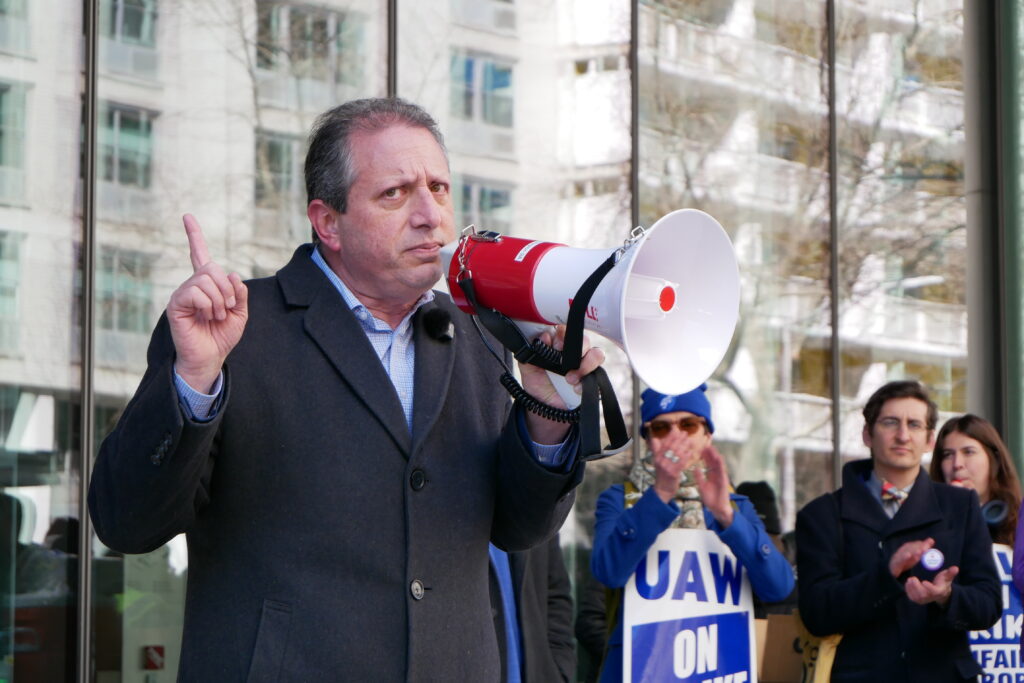
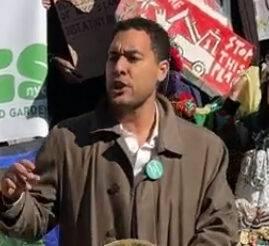
Brad Lander, former NYC Comptroller and current candidate for congress in New York’s 10th District, which includes the NYU campus in lower Manhattan, also connected the strike to the national education landscape in a speech to the strikers on Tuesday.
The Trump administration’s assault on higher education and unions cannot be an excuse for universities like NYU to turn their back on faculty, he said. “I think the fate of higher education, of universities in the United States right now, is on the line right here at NYU, at this picket line.”

Excellent story Brennan!