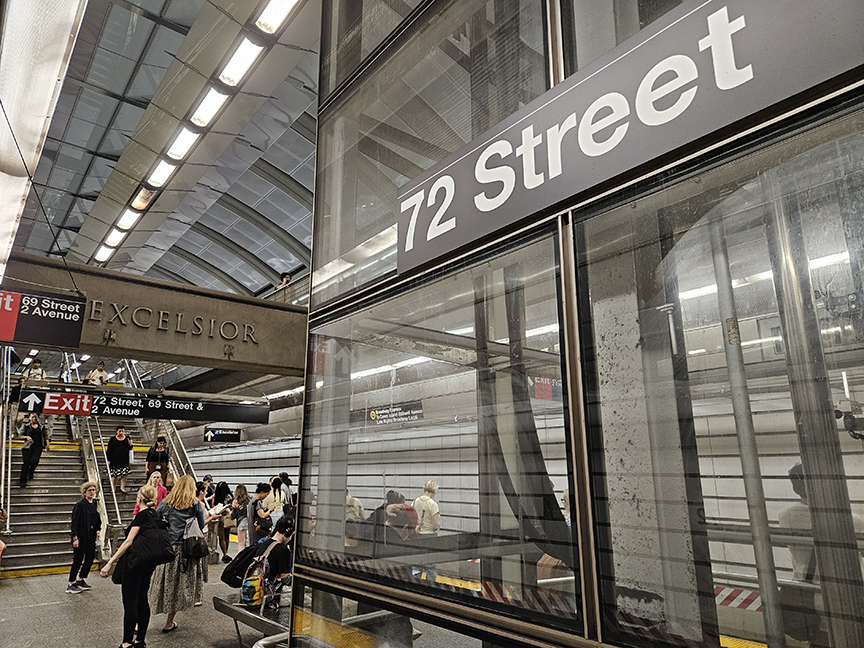
The Second Avenue Subway was back in the news a few months ago when Gov. Kathy Hochul proposed that the third step for the Second Avenue Subway, rather than proceeding south from 63rd Street, should be heading west across 125th Street to 8th Avenue, with connections to other lines.
While there was some support among transit advocates, most people were ho-hum about this. Tunnel boring hasn’t even begun on the second step, which would extend the line north to 125th Street. Even the existing segment, between 63rd and 96th Street, took about 20 years to build. A subway line down Second Avenue was first proposed in 1920, and for many years, the “Second Avenue Subway” was the punchline for a joke.
To get to the history of the Second Avenue Subway, we must first examine the Second Avenue El, or elevated line. The el wasn’t completely on Second Avenue – it turned east one block on 23rd Street, then went south down First Avenue and Allen Street. Built in 1878, it was one block from the better-known Third Avenue El.
Why two els a block apart? They were built by rival companies. Both soon became part of the Manhattan Railway Company. This organization, in turn, was absorbed by the Interborough Rapid Transit Company (IRT), which built the city’s first subway in 1904.
Toward the end of the 19th century, the Third Avenue El expanded into the Bronx. The Second Avenue El followed, merging with the Third Avenue line at 129th Street and using its tracks northward. More importantly, in 1917, the Second Avenue El was extended onto the Queensboro Bridge. Now, some Second Avenue trains branched off, went over the bridge, and merged into the Astoria and Flushing lines. This gave Queens riders a one-seat commute to Lower Manhattan in an era when more people worked Downtown than in Midtown.
In 1940, after the city took over the IRT, it demolished the Second Avenue El above 59th Street. The el continued to operate south of, and over, the Queensboro Bridge, since Queens politicians had pull with City Hall.
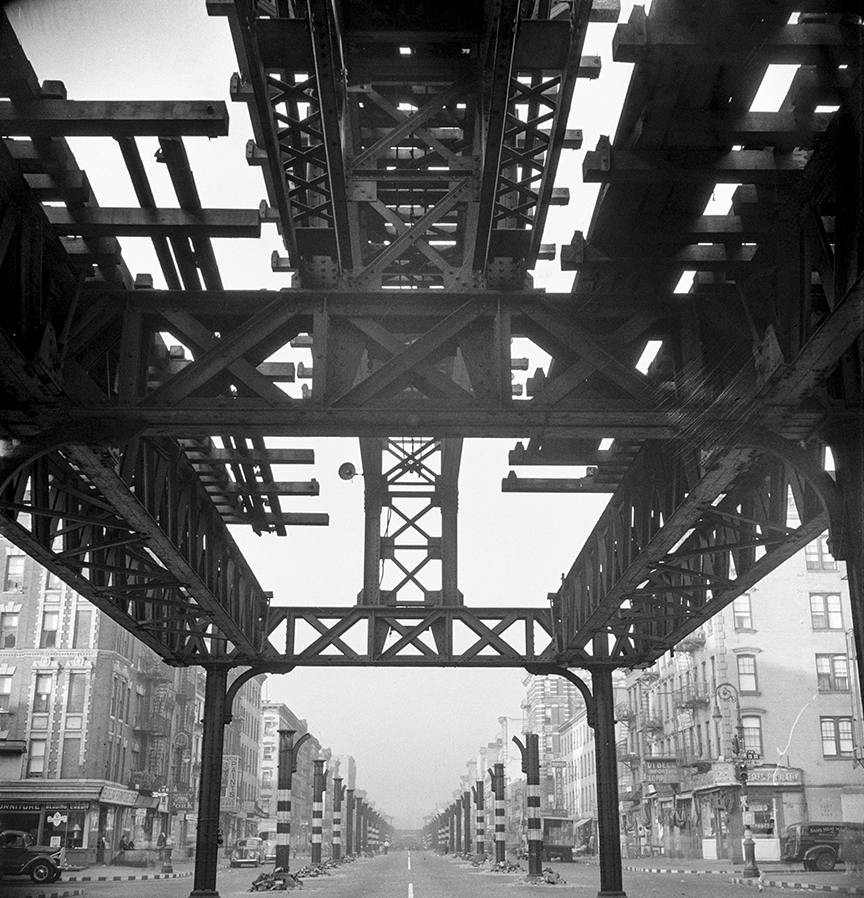
The Second Avenue El being demolished at First Avenue and 13th Street in 1942.
Public domain photo by Marjory Collins via Wikimedia
However, throughout the 1930s, the First Avenue Association, an organization of big-time realtors and wealthy businessmen, kept pushing the city to demolish the el so that real estate values could increase. Tearing down its upper portion wasn’t enough for them – they wanted the whole thing gone.
World War II gave the First Avenue Association the argument that they needed. They suddenly became patriots, saying the steel in the Second Avenue El was needed for the war effort. And so, in 1942, its lower half, too, was scrapped.
Meanwhile, plans for a Second Avenue Subway were advancing. In 1929, the city’s Board of Transportation proposed an elaborate “Second System” to complement the city-owned IND, then under construction. (The IND, or Independent, system, now part of MTA New York City Transit, consists of the lines that feed into the 8th Avenue and 6th Avenue trunklines, as well as the G in Brooklyn.)
Of course, a Second Avenue line was part of that plan. The Depression put a hold on that. Then, a 1939 map of proposed new subway lines shows a Second Avenue line. Again, timing was bad – war was around the corner.
Throughout the 1940s and ‘50s, plans for a Second Avenue Subway were floated. In 1951, voters even approved a bond issue for the new line. However, due to a budget crunch, funds were diverted to new cars for existing lines and maintenance. Many historians blame Robert Moses, who didn’t think much of mass transit and allocated very little money for it.
The line next received a shot in the arm in the prosperous 1960s – and this time, parts were actually built. The Urban Mass Transportation Act of 1964 provided grants of up to 50 percent for transit projects in urban areas. This started the ball rolling.
In 1968, the New York City Transit Authority (now part of the MTA) published an ambitious “Program for Action” with new lines in four of the five boroughs. A Second Avenue line was given top priority, and in 1972-73, tunnels were dug in Chinatown, the Lower East Side, the Upper East Side, and East Harlem. But in 1975 came the devastating Fiscal Crisis, and the tunnels were sealed up.
The only successful push for the Second Avenue subway, which led to the 1.8-mile segment we see today, began in the 1990s, sparked by Democratic politicians like Mario Cuomo and Hillary Clinton. Construction began in 2007, and, to no one’s surprise, was marked by delays and cost overruns. Many readers will remember the “muck houses” that housed debris and rocks from the tunneling process. Finally, “Phase 1,” stretching from 63rd to 96th Streets, opened on New Year’s Day, 2017.
As for Phase 2, which would bring the subway up through East Harlem and then connect with Metro North at 125th Street, the tunnel-boring contract was signed last year. Phase 2 will also utilize two tunnel segments built during the 1970s.
In March, the MTA sued the federal government for withholding promised funds for the project. Last year, the Trump administration froze this funding because the transit agency was supposedly taking race and sex into account when giving out contracts, a no-no in the Trumpian world. On April 17, President Trump finally released the funds.