
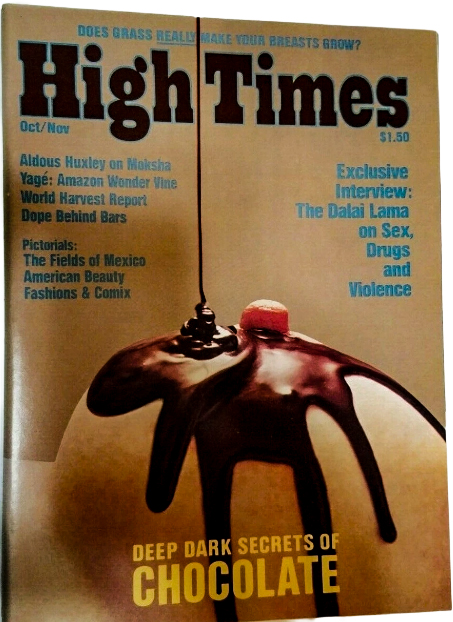
High Times a documentary short about the magazine and its founder Tom Forçade is now on Hulu as part of 4X20: Quick Hits, an anthology of 20-minute documentaries about weed culture produced by Jimmy Kimmel.
As I walk from the licensed cannabis dispensary along New York sidewalks scented with the ubiquitous smell of weed, it’s obvious how times have changed in the 50 years since I worked as an associate editor at High Times, the pot magazine.
Recreational marijuana is legal in 24 states, medical marijuana is legal in 39, and psychedelic therapy is a legitimate and growing field with ketamine now FDA-approved for treatment-resistant depression, and MDMA, psilocybin, and LSD under review for psychiatric disorders.
More mind-blowing still, the walking, talking bummer Donald Trump has issued executive orders easing restrictions on psychedelic research and reclassifying pot from an evil Schedule I narcotic like heroin to a medically beneficial Schedule III drug.
Far out.
But back in 1978 when I started working at High Times, possession of weed could still land you in jail and we worked with the blinds drawn, sure that Drug Enforcement Agency narcs were spying on us from across the street.
High Times’s originator Tom Forçade, an undiagnosed manic-depressive, blew his brains out a few months before I was hired. Forçade, who’d made a fortune flying planeloads of pot to the U.S. from Mexico, used the money to bankroll the magazine, and endowed it with its dual counterculture spirit of outlaw activism and rank paranoia.
My articles on mind control, subliminal advertising, and other political and cultural hot buttons were supposed to bring a halo of intellectual respectability to the magazine’s half-million stoner readers, who left to their own devices probably would have preferred staring blankly at the giant resinous cannabis bud in the centerfold.
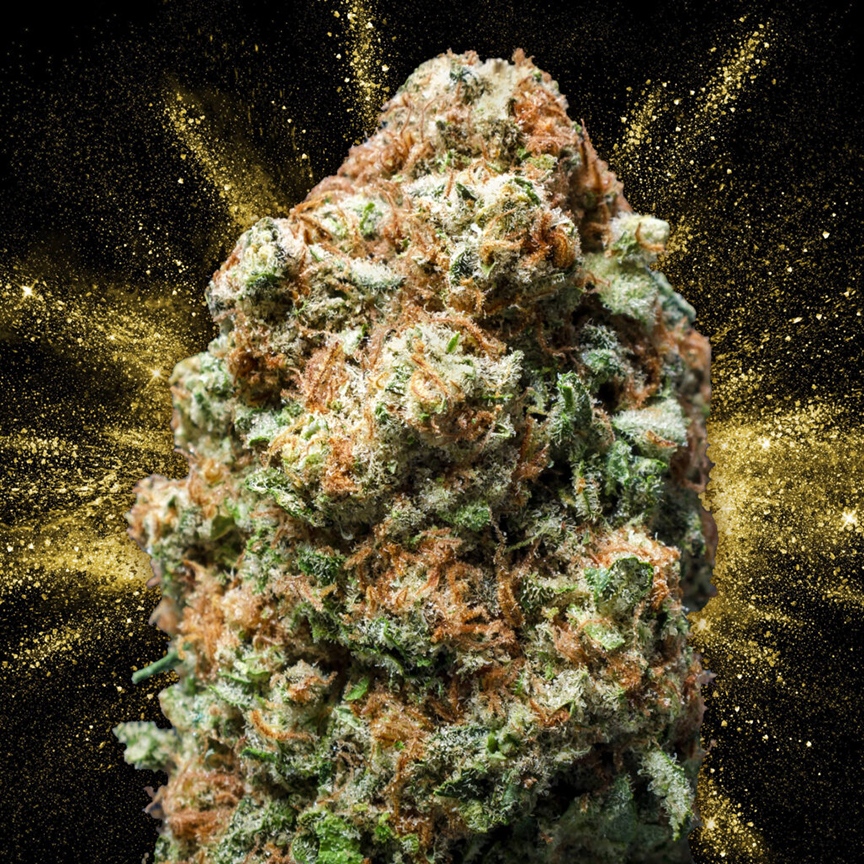
Occasionally, I’d accompany “R” the Dope Connoisseur (the High Times pseudonym of the now noted author Ron Rosenbaum), on round-about journeys across Manhattan, like cloak-and-dagger spies, switching cabs and waiting at street corner phone booths for directions to secret Bud-of-the-Month photo shoots. Like Playboy models’ breasts, the marijuana buds selected as High Times centerfolds were lugubrious, typically the size of an ear of corn, and shimmering with purple and gold dusty resin under the photographer’s spotlight.
Behind closed blinds, the office was skunky-smelling and hazy with pot smoke. Only the news editor abstained because he preferred Quaaludes as his work-drug of choice. He’d gobble a handful, saying they helped him concentrate, as he staggered down the hall, literally bouncing off the walls, drooling and cross-eyed.
Besides Rosenbaum, other High Times alumni went on to success in the real world. Victor Bockris wrote pop biographies of Andy Warhol, Keith Richards, and a half dozen other celebrities;
Larry “Ratso” Sloman wrote books about Bob Dylan and Howard Stern and recently played the shoe store-owning uncle in Marty Supreme; and Allen Sheinman went on to edit AARP, the American Association of Retired People’s magazine for senior citizens like all of us are now.
As for me, though I couldn’t have imagined it at the time, those years promoting the wonders of weed eventually morphed into a career as a creative director at a major pharmaceutical advertising agency. I used to enjoy shocking my staid pharma company clients by telling them that I’d learned everything I knew about how drugs worked at High Times. Which, strange as it may sound, was true.
It was there that I began a two-year collaboration with Dean Latimer, the legendary drug-lore sage and Samuel Johnson of the underground press.
Paunchy and perpetually disheveled in a weathered down-vest, with a mop of greasy, graying hair, a bushy mustache, rosy cheeks and nose, he’d arrive at the office at the stroke of deadline time with a satchel filled with articles slung over this shoulder, greeting everyone with a jolly, “G’day, g’day, g’day,” like a gonzo Santa Claus doling out pearls of wisdom.
Latimer and I collaborated on a history of opium Flowers in the Blood and developed a keen mutual interest in the then-recent discovery of endorphins—naturally occurring morphine-like molecules in the brain. We coauthored an article titled Future Drugs: They’re All in Your Head in the January 1980 issue of High Times, featuring a cover illustration of a bald woman jacking into her neural nets with high-tech headgear. The story reported a growing belief among researchers that most drugs acted by imitating substances already in the body.
Prozac and other antidepressants (as well as the psilocybin in magic mushrooms) imitated the neurotransmitter serotonin in the brain’s reward centers, aspirin relieved pain by blocking receptors for inflammatory chemicals called prostaglandins, and opioids produced their analgesic effects by activating receptors for endorphins.
A few years later, our article on future drugs became the basis of my book Anatomy of a Scientific Discovery about the race to discover endorphins, and the subsequent competition between pharma companies to develop the first man-made endorphin drug. At the time, they believed it would be the long-sought “bee without a sting”—a narcotic with the power of morphine that would not be addictive—a prize worth hundreds of millions of dollars.
In the end, the effort failed when their man-made endorphins turned out to be just as addictive as morphine, and much more expensive to produce. But the endorphin book established my reputation as a science writer and set the course for my career in pharma.
I don’t know what became of Dean Latimer. Rumors of his death circulated on the internet a couple of years back but proved to be baseless.
The last time I saw him was in 1985, while I was finishing work on the endorphin book. I was living on 90th Street near Central Park at the time, when early one evening, he called in a panic to say that he was being evicted. He muttered something about bugs and contamination.
Dean had many quirky traits, among them Diogenes Syndrome, a compulsion to live in squalor, like Edie Bouvier Beale and her mother in the movie Grey Gardens. The sleazy hotel room where he lived was barely big enough to fit the bed, where I’d usually find him when I’d come over, surrounded by overflowing ashtrays, piles of old newspapers, stacks of books, cartons of sour milk, and scraps of food moldering in take-out containers. When a mouse would poke its head up from the floorboards, he’d casually throw a book at it and, in a jocular professorial tone, pick up the conversation where he’d left off.
After his call, I took a cab to his hotel to help him pack his books and coffee-stained notes into boxes. When I arrived, he was sitting up on the bed as usual, nonchalantly sorting through some papers. But as we were talking, I thought I saw the wall behind him moving, undulating in subtle but unmistakable waves. I’d smoked a strong joint earlier in the evening and brushed it off as a pot-induced hallucination. That is, until I realized that what was moving was a pulsing army of cockroaches, all seemingly making their way towards Latimer as if he was their mighty all-providing God.
I let him stay at my place that night and store his boxes there until he settled in another cheap hotel.
Dean Latimore was one of my heroes and mentors, but after he left the next morning, I threw away the sheets he’d slept on and thoroughly sprayed his boxes with RAID.



Really enjoyed reading a recap of your career and adventures.